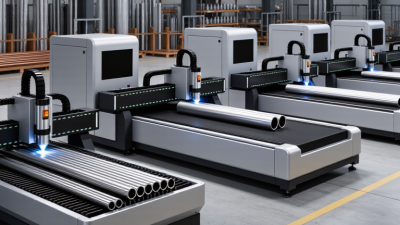
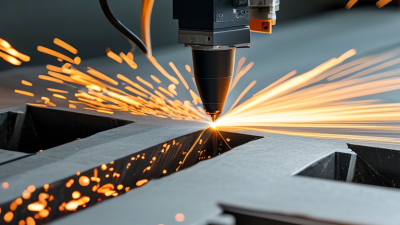
Global buyers are entering a more demanding tube laser cutting market. Machine speed still matters, but it cannot stand alone. Cut quality, tube handling, software stability, service response, and energy use often decide the real investment value.
Grand View Research estimated the global laser cutting machine market at about USD 5.75 billion in 2022. Its report projects continued growth through 2030, supported by automation, electric vehicles, and metal fabrication. MarketsandMarkets also expects strong expansion, although market boundaries differ between reports. That difference deserves attention. It shows why buyers should not trust one headline figure without checking definitions, regions, and machine categories.
Dr. Reinhart Poprawe, a respected laser-manufacturing researcher and former Fraunhofer ILT director, has emphasized that “the laser is a flexible tool for manufacturing.” The machine is only one part of the process. A poorly matched chuck, unstable nesting software, or slow technical support can erase its productivity advantage. Real experience makes this clear. A bright showroom cut may look perfect, yet production reveals burrs, heat distortion, or difficult profile changes. This guide, “10 Tube Laser Cutting Tips for Global Buyers,” examines those practical risks. It focuses on measurable specifications, supplier credibility, total operating cost, and after-sales support. Some recommendations may seem obvious. They are still frequently missed.
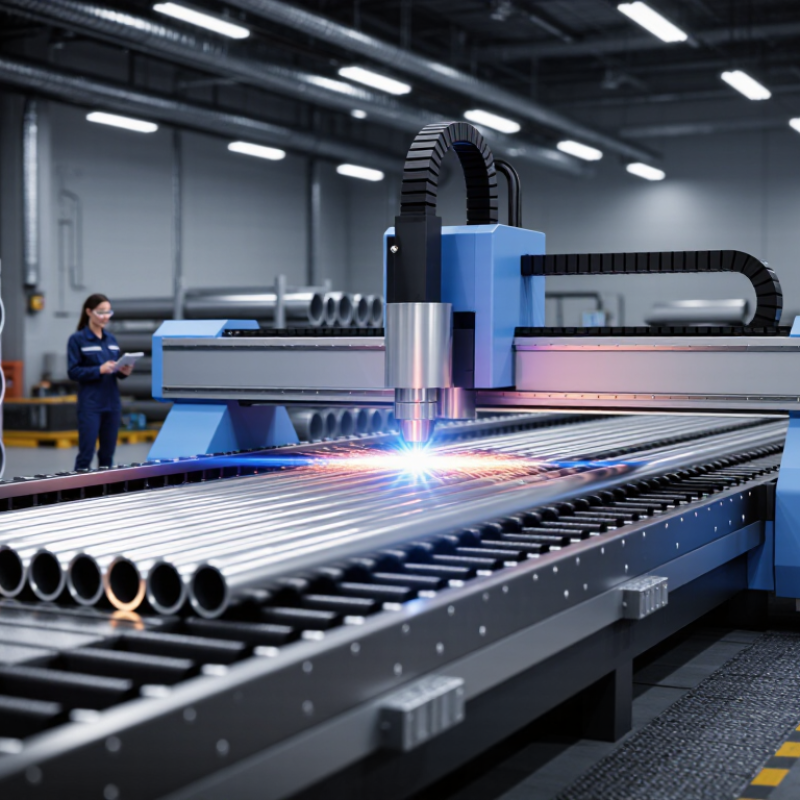
Define tube specifications before comparing laser machines. State the outside diameter range clearly: 20–350 mm. Include round, square, rectangular, and oval profiles. A 350 mm tube needs sufficient chuck clearance and stable support. A 20 mm tube needs accurate centering. Small details matter.
Wall thickness should cover 0.5–12 mm, but one machine rarely performs equally across this range. A 0.5 mm wall needs low heat input, fine focus, and careful acceleration. A 12 mm wall requires stronger penetration, suitable assist gas, and slower cutting. Tolerance matters. Confirm the actual tolerance, not only the maximum capacity. Ask for sample cuts using your steel grade, diameter, wall thickness, and requested edge quality. A clean catalogue specification can still fail in production.
Market context supports careful sizing. The World Steel Association reported approximately 1.88 billion tonnes of crude steel production in 2024, showing the scale of global metal fabrication. The International Energy Agency’s Global EV Outlook 2024 recorded more than 17 million electric car sales in 2024, increasing demand for lightweight frames, battery supports, and structural tubing. These sectors often use mixed tube sizes, not one standard profile. Leave room for imperfect assumptions. Your largest tube may be rare, while thin-wall orders may dominate weekly production. Confirm loading length, bundle weight, piercing time, and dimensional accuracy before purchasing.
The chart organizes the stated 20–350 mm tube diameter range into practical specification bands and shows an illustrative wall-thickness planning envelope from 0.5 to 12 mm. Confirm the actual cutting capacity, material grade, tube profile, chuck size, and required tolerances with the equipment supplier before purchasing.
Choosing tube laser power starts with the material, not the machine’s headline rating. For mild steel and stainless tube, a 1–6 kW fiber source covers many production needs. Lower power can handle thin profiles efficiently, while higher power supports thicker walls and faster throughput. Yet power alone does not decide cut quality. Wall thickness matters. Tube diameter, alloy, tolerances, and gas selection matter too. Thin stainless may need careful heat control to prevent discoloration and edge distortion. Thicker carbon steel often benefits from stronger piercing performance and stable oxygen flow.
During equipment evaluations, I compare requested output with the buyer’s actual cutting schedule. A workshop processing 2 mm stainless daily may gain little from a 6 kW source. A fabricator cutting 8 mm steel tubes may find 1 kW painfully slow. That difference affects cycle time, energy use, and return on investment. Test cuts are essential. Ask for samples using your own tube sizes, grades, and tolerances. Inspect the cut face, burr level, piercing time, and repeatability. Do not accept polished demonstrations alone.
Global buyers should also verify service coverage, spare-part access, and operator training. These details protect production when a nozzle clogs or alignment drifts. Still, specifications can mislead. A larger laser is not automatically the wiser purchase. Choose the lowest practical power that meets thickness, speed, and quality targets. Leave room for future work, but do not pay for unused capacity. My own planning can be too optimistic. Real production is messier than a test sheet.
| Tip | Material and Tube Type | Typical Wall Thickness | Suggested Fiber Power | Recommended Assist Gas | Indicative Cutting Speed | Key Buyer Check |
|---|---|---|---|---|---|---|
| 1 | Mild carbon steel round, square, or rectangular tube | 1.0–3.0 mm | 1–2 kW | Oxygen for efficient cutting; nitrogen where a cleaner edge is required | Approximately 2–12 m/min, depending on section size and gas pressure | Confirm that the machine can maintain stable focus and pierce settings across the full tube profile. |
| 2 | Mild carbon steel structural tube | 3.0–6.0 mm | 2–3 kW | Oxygen is commonly used for productive cutting | Approximately 0.8–5 m/min | Check the source's continuous-duty rating, piercing capability, and thermal stability during long production runs. |
| 3 | Thick carbon steel tube | 6.0–10.0 mm | 3–6 kW | Oxygen, with controlled pressure and suitable nozzle selection | Approximately 0.3–2.5 m/min | Higher power is useful only when the machine also provides sufficient gas pressure, rigidity, and heat management. |
| 4 | 304 or 316 stainless-steel tube | 1.0–3.0 mm | 1–2 kW | High-pressure nitrogen for an oxide-free, corrosion-resistant edge | Approximately 1.5–10 m/min | Budget for nitrogen consumption; gas purity and pressure strongly affect edge color, dross, and consistency. |
| 5 | 304 or 316 stainless-steel tube | 3.0–6.0 mm | 2–4 kW | Nitrogen is normally preferred for production-quality edges | Approximately 0.6–4 m/min | Ask for verified sample cuts at the target thickness rather than relying only on maximum rated power. |
| 6 | Thick stainless-steel tube | 6.0–10.0 mm | 4–6 kW | High-pressure nitrogen; oxygen may be acceptable when oxidation is not critical | Approximately 0.2–1.8 m/min | Confirm that the cutting head, chiller, and gas system are rated for continuous high-power stainless-steel work. |
| 7 | Small-diameter precision steel tube | 0.8–2.0 mm | 1–1.5 kW | Nitrogen for clean edges; oxygen for carbon steel productivity | Approximately 3–15 m/min | Prioritize low minimum power, fine beam control, accurate rotary-axis positioning, and reliable small-aperture nozzles. |
| 8 | Large-diameter carbon-steel tube | 2.0–6.0 mm | 2–4 kW | Oxygen for carbon steel; nitrogen for a non-oxidized finish | Approximately 0.7–6 m/min | Evaluate chuck clearance, tube support, maximum workpiece length, and anti-sway performance before purchase. |
| 9 | Mixed steel and stainless-steel production | 1.5–6.0 mm | 3–4 kW | Oxygen for carbon steel and nitrogen for stainless steel | Approximately 0.6–9 m/min | Choose a system with fast recipe changes, automatic gas selection, and repeatable focus calibration. |
| 10 | High-volume, heavy-duty steel and stainless applications | 4.0–10.0 mm | 4–6 kW | Oxygen for carbon steel; high-pressure nitrogen for stainless steel | Approximately 0.2–4 m/min | Compare total operating cost, including electricity, assist gas, consumables, maintenance, and expected utilization. |
| Reference note: Cutting speeds are indicative starting ranges, not guaranteed specifications. Actual performance varies with steel grade, tube geometry, outside diameter, corner radius, beam quality, nozzle design, gas purity, gas pressure, focus position, machine rigidity, and programming strategy. Always validate the selected power level with production samples. | ||||||
When comparing tube laser systems, treat ±0.1 mm as a measured result, not a sales promise. Ask how accuracy was tested, over what tube length, and under which temperature. A short sample may look perfect. Longer tubes expose alignment drift, chuck runout, and oval material. Request a documented test piece with outside dimensions, hole positions, and repeatability data. Measure it with calibrated tools, preferably a coordinate measuring machine when the tolerance affects assembly. This creates evidence you can audit later.
Cutting rates of 3–10 m/min also require context. Material grade, wall thickness, tube profile, laser power, assist gas, and feature density all change the usable speed. A thin, straight cut may reach 10 m/min, while thick stainless steel needs a slower setting. Do not compare empty travel speed with actual cutting speed. Ask for a timed trial using your own tube, including piercing, repositioning, and unloading. The edge should show limited dross, stable kerf width, and clean corners. Fast is not always productive.
During supplier checks, verify calibration records, maintenance intervals, and operator training. Watch a complete cycle, not only a polished demonstration. I have seen small errors grow after several hours of heat buildup. That problem is easy to miss. Leave room for uncertainty. A realistic purchase decision may accept 0.1 mm on simple features but require tighter control on critical holes. Put inspection methods, sample conditions, and acceptable speed ranges into the technical agreement. Without those details, impressive numbers remain difficult to reproduce on your factory floor.
For global buyers, tube laser automation must be judged beyond cutting speed. The International Federation of Robotics reported 541,302 industrial robot installations worldwide in 2023. This growth reflects stronger demand for repeatable material handling. Automatic loading can reduce lifting risks, idle time, and alignment errors. However, a faster loader is not automatically safer. Confirm tube diameter limits, bundle separation, sensors, guarding, and emergency-stop access before purchase.
Tip: Request a live loading test with your actual tube sizes and weights. Watch the transfer area closely. Does the system detect a misplaced tube? Can operators clear a jam without entering a hazardous zone? These practical checks often reveal weaknesses that brochures omit. The International Labour Organization continues to identify machinery-related hazards as a serious workplace concern, making risk assessment essential during installation and training.
For European sales, CE marking requires a documented conformity process, not simply a logo on the machine. Ask for the Declaration of Conformity, technical documentation, and risk assessment. IEC 60204-1 addresses electrical equipment of machines, including protective bonding, control circuits, wiring, and verification tests. Compliance should match the machine’s actual configuration. A minor option change may affect the assessment. Buyers should also confirm local electrical requirements, operator language, maintenance access, and service response. Documentation can look complete while practical training remains thin. That gap deserves attention.
A tube laser cutter should be judged by five-year ownership cost, not its purchase price. Build a spreadsheet with electricity, assist gas, consumables, maintenance, training, and downtime. Energy use changes with laser power, cutting speed, and daily workload. A machine running eight hours daily can create a very different bill from one used occasionally. Use local electricity rates and realistic production hours.
Tip: Request measured power data for cutting, standby, and cooling. Do not rely only on rated power. Assist gas may become a major expense, especially for thick steel or long production runs. Compare oxygen, nitrogen, and compressed air costs for your materials. Include gas pressure, purity requirements, cylinder rental, and delivery charges. A low gas price is meaningless if supply is unreliable.
Tip: Track consumables by operating hour. Nozzles, lenses, protective windows, and ceramic parts require regular replacement. Service contracts should state response times, travel charges, labor rates, and included inspections. Keep a small spare-parts budget. That is practical. Downtime can cost more than parts. My caution is simple: five-year estimates are never perfect. Operators change settings, material prices move, and production plans often grow. Add a contingency allowance, perhaps 10–15%, and review the model every six months. Ask for maintenance records from similar installations, when available. Their lessons may reveal costs that a quotation hides.