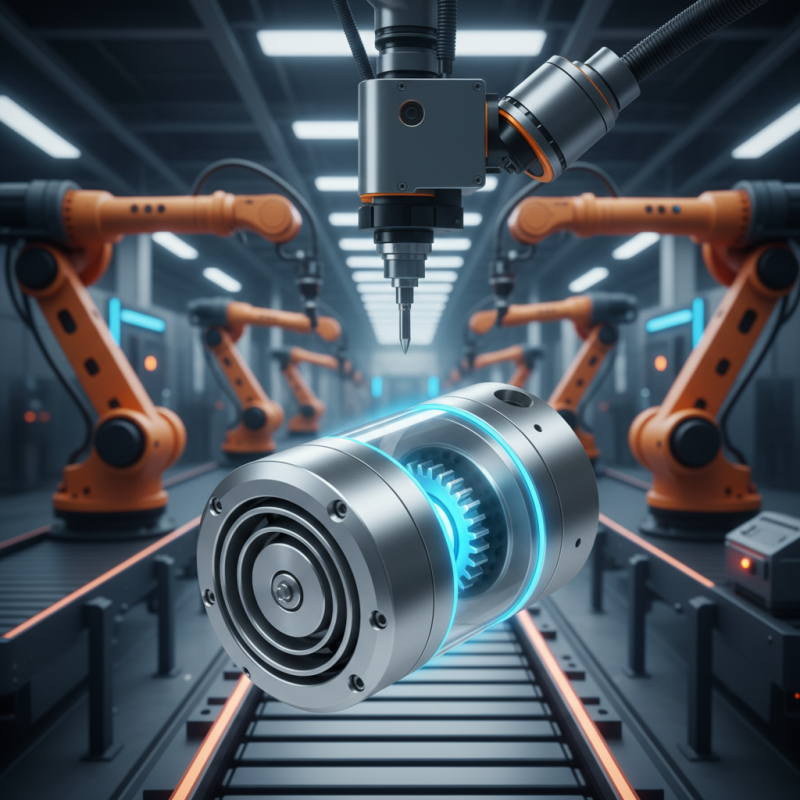
180 Rotation Rotary Actuator Best Applications and Benefits?
The 180 Rotation Rotary Actuator has become essential in numerous industries. It offers precise control for various applications. Understanding its benefits helps in optimizing performance.
These actuators provide smooth rotation, enhancing the efficiency of machines. In robotics, they enable better motion control. In automation, their reliability is crucial for consistent operation. However, efficiency can sometimes vary based on the application. This inconsistency often leads to necessary adjustments.
Exploring the top applications reveals their versatility. From assembly lines to automotive designs, their impact is significant. Yet, the user must be aware of potential limitations. Evaluating these factors is important for maximizing benefits.
180 Rotation Rotary Actuator: Definition and Working Principle
A 180 rotation rotary actuator is a device that enables precise movements. Its primary function is to turn objects by a half-circle. The actuator uses a combination of gears and motors to achieve this. It often works with control systems, allowing for automation in various applications.
When the actuator is engaged, it rotates to a specific angle. This movement is controlled electronically, making it highly efficient. However, not all situations suit this actuator. Sometimes, the movement may not be smooth or may require complex adjustments. Users must find the right fit for their needs.
In many applications, such as robotics, the 180 rotation rotary actuator shines. It assists in position adjustments and actuation tasks. However, users need to consider power consumption. While it may provide great performance, excessive energy use can be a concern. Additionally, maintenance is crucial to keep it functioning well over time. This balancing act between efficiency and practicality can be challenging but necessary.
180 Rotation Rotary Actuator Best Applications and Benefits
| Application | Benefits | Key Features | Typical Industries |
| Robotics | Precision control, high torque | Compact design, reliable performance | Manufacturing, Automation |
| Aerospace | Lightweight, high durability | Customization options, low maintenance | Defense, Civil Aviation |
| Automated Machinery | Increased efficiency, reduced human error | Smooth operation, high reliability | Packaging, Food Processing |
| Medical Devices | Enhanced patient safety, accurate positioning | Hygienic design, compact size | Healthcare, Surgical Equipment |
| Agriculture | Improved crop handling, automation | Rugged construction, efficient power usage | Farming, Horticulture |
Key Applications of 180 Rotation Rotary Actuators in Industry
180-degree rotation rotary actuators are integral to various industrial applications. They provide precise control for systems requiring limited movement. Commonly, they are used in robotics, automated assembly, and material handling. These actuators can pivot mechanisms quickly and accurately, ensuring efficient workflows.
In the manufacturing sector, these actuators simplify the operation of conveyor systems. They allow for quick changes in direction. This capability can enhance productivity but also may need careful calibration to avoid sudden stops or misalignments. Additionally, they are used in packaging processes, where precise rotation is essential. A minor miscalculation here could lead to wasted materials.
Yet, there can be challenges with these devices. For instance, installation may require specific technical skills. Regular maintenance is necessary to avoid performance issues. If neglected, actuators may not function as intended. Understanding the limits and potential issues can lead to better implementation in industrial settings.
Benefits of Using 180 Rotation Rotary Actuators in Automation Systems
180 rotation rotary actuators play a vital role in automation systems. These devices enable precise control over movement and positioning. They are designed for tasks requiring a 180-degree rotation. This versatility allows for applications in various sectors. Industries like manufacturing and robotics benefit most from these actuators.
The benefits are notable. They provide fast and accurate movements. This precision reduces error rates in automated processes. Moreover, these actuators often require less space. Their compact design is ideal for confined areas. Additionally, integration with control systems is typically straightforward. Monitoring and adjusting operations become simpler.
However, challenges exist. Some actuators might have limitations in torque. This could impact performance in demanding scenarios. There are also instances of wear and tear over time. Regular maintenance is essential to ensure optimal functioning. Automation systems must be regularly assessed to enhance efficiency. Enhancing reliability can be an ongoing concern for operators.
Comparison of 180 Degree Actuators with Other Actuator Types
When comparing 180-degree rotary actuators with other actuator types, their unique characteristics stand out. These actuators can rotate objects fully within a limited range. This feature is beneficial in applications like industrial automation. They excel in positioning mechanisms, such as valves and conveyor systems. The precise movement enables easier control and efficiency.
In contrast, linear actuators operate along a straight path. While they are suitable for tasks like lifting and pushing, they do not offer the same angular flexibility. Pneumatic and hydraulic systems can deliver more power but may be less precise. Rotary actuators perform well in tight spaces, where linear options may struggle. This makes them invaluable in compact setups, though they sometimes require careful placement considerations.
Despite their advantages, 180-degree actuators are not without challenges. They might experience limitations in rotation speed or torque depending on the application. Additionally, if not properly calibrated, malfunctions can occur. Users must weigh these factors carefully. Understanding the specific requirements of your project can lead to better actuator choices.
Industry-Specific Data on Performance and Efficiency of Rotary Actuators
Rotary actuators are crucial in many industries. Their 180-degree rotation capability enhances efficiency in various applications. For instance, in manufacturing, they simplify tasks like positioning and assembly. This leads to faster production rates and improved output quality.
When examining industry-specific data, the performance of rotary actuators varies. In the automotive sector, they help automate assembly lines, reducing labor costs. Yet, in some applications, they may struggle with precision. Efficiency can drop due to wear and tear over time, prompting businesses to rethink maintenance strategies. Regular assessments can identify potential failures.
In the food industry, rotary actuators assist in packaging and sorting. They can improve productivity dramatically. However, hygiene standards place limitations on actuator designs. Manufacturers must ensure that actuators withstand cleaning processes. This is a complex challenge that necessitates a balance between durability and performance. Data shows that with the right approach, rotary actuators can optimize operations, even when obstacles arise.