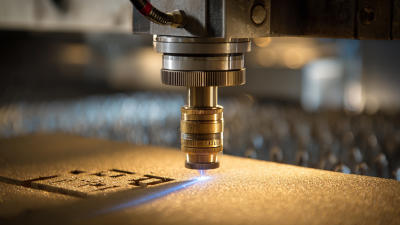
Choosing a cnc milling machine in 2026 requires more than comparing spindle speeds or glossy product photos. The right machine must match your materials, part dimensions, tolerances, production volume, and operator skills. A compact three-axis model may suit an engineering workshop, while a production facility might need five-axis movement, automatic tool changes, and stronger chip evacuation.
Look closely at practical details. Measure the machine’s working envelope against your largest planned component. Check spindle power, taper type, positioning accuracy, repeatability, control compatibility, and cooling performance. Ask the supplier for real test-cut results, not only catalog claims. A machine cutting aluminum smoothly may struggle with stainless steel after several hours. Small details matter.
Service support matters too. Confirm spare-parts availability, software updates, training, warranty terms, and response times. Review maintenance records when buying used equipment. No checklist is perfect. Budget pressure can also make a cheaper machine seem attractive, although downtime may cost more later. Reliable decisions come from comparing verified specifications with actual workshop conditions. This guide explains how to evaluate each factor, avoid common purchasing mistakes, and select a cnc milling machine that remains productive beyond its first year. Expect trade-offs. Even experienced buyers sometimes underestimate floor space, electrical requirements, tooling costs, or operator training. The best choice is not always the most advanced machine. It is the one your team can use accurately, safely, and consistently.
Choosing a CNC milling machine in 2026 should begin with a clear production question: what must it make, and how often? Define the parts, tolerances, surface finishes, and monthly quantity before comparing machine specifications. A small workshop producing aluminum brackets needs different capacity from a manufacturer cutting hardened steel housings. Write down the largest part size, deepest pocket, and most demanding hole. Measure twice. Guessing here can create expensive limits later.
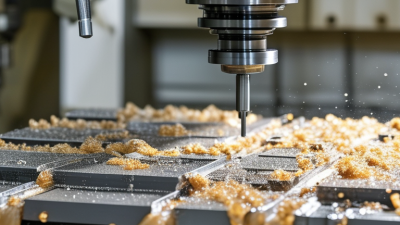
Material selection directly affects spindle power, rigidity, tooling, and coolant needs. Aluminum may allow higher cutting speeds, while stainless steel demands stable clamping and controlled heat. Plastics need sharp tools and careful chip removal. If your work includes several materials, test the hardest one first. Ask for cutting trials, sample parts, and documented accuracy results. These provide stronger evidence than attractive specifications. Still, a trial part may not represent months of production. That deserves careful reflection.
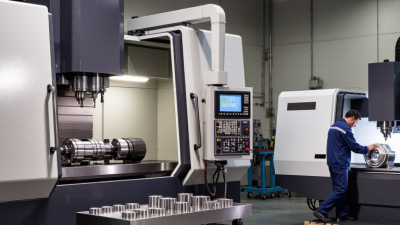
Production requirements determine automation and machine configuration. For occasional prototypes, flexible fixturing and quick setup may matter most. For repeated batches, tool capacity, probing, chip evacuation, and dependable cycle times become more important. Consider operator skill, floor space, power supply, maintenance access, and inspection equipment. Record actual cycle times from your current process, even if the numbers are imperfect. A machine that is fast on paper may lose hours during setup or tool changes. Choose capacity with modest headroom, not unlimited capacity.
Define your material and production requirements before selecting spindle speed, machine rigidity, and automation. The chart shows typical starting spindle-speed ranges for carbide milling tools. Actual settings depend on tool diameter, cutter geometry, workholding, machine rigidity, coolant, and cutting depth.
How to Choose a CNC Milling Machine in 2026
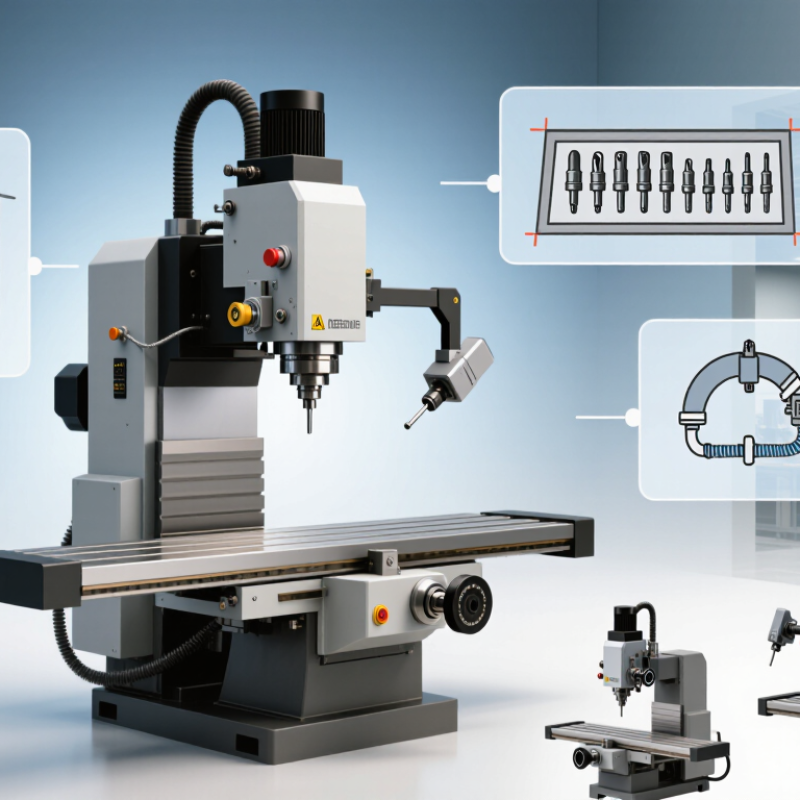
Choosing a CNC milling machine starts with the workpiece, not the machine’s advertised speed. A three-axis vertical mill suits flat parts, pockets, and regular maintenance work. It is often easier to program and less expensive to operate. A four-axis machine adds rotary positioning for multiple faces. A five-axis model reaches complex surfaces with fewer setups. That flexibility can reduce errors, but programming demands increase sharply.
Size matters beyond the table dimensions. Measure the largest part, fixture, cutter, and clearance needed around the spindle. Leave practical space for chip removal and operator access. A compact machine may fit a small workshop, yet its limited travel can restrict future projects. Horizontal mills support heavy cutting and efficient chip evacuation. Vertical mills usually offer better visibility and simpler daily access. Consider spindle power, taper type, tool capacity, coolant delivery, and workholding strength together.
Operating configuration should match production habits. Manual loading suits prototypes and varied jobs. Pallet systems or robotic loading help repeat batches, but they add setup and maintenance requirements. I once underestimated fixture space and lost useful travel on a machine that looked large on paper. That mistake changed my selection process. Now, I test the full setup with a drawing, fixture model, cutter length, and operator reach. The “largest capacity” is not always the most useful capacity.
| CNC Milling Machine Type | Typical Axes | Typical Work Envelope | Typical Spindle Range | Common Operating Configuration | Suitable Materials | Main Advantages | Typical Limitations | Recommended Applications |
|---|---|---|---|---|---|---|---|---|
| Benchtop or Desktop CNC Mill | 3 axes; optional rotary fourth axis | Approximately 200–600 mm X travel 150–400 mm Y travel 200–400 mm Z travel |
6,000–24,000 rpm Approximately 0.5–3 kW |
Manual tool loading or compact automatic tool changer; usually open or enclosed work area | Aluminum, plastics, wood, brass, wax, and light steel cutting with conservative parameters | Low footprint, lower purchase cost, simple installation, and suitable for education or prototyping | Limited rigidity, smaller work envelope, lower material-removal rate, and reduced capability for heavy steel machining | Prototypes, models, fixtures, laboratories, classrooms, and small precision components |
| Vertical Machining Center (VMC) | 3 axes; fourth-axis or fifth-axis options are common | Approximately 500–1,500 mm X travel 350–800 mm Y travel 400–700 mm Z travel |
6,000–18,000 rpm Approximately 7.5–30 kW |
Vertical spindle, fixed table, automatic tool changer, coolant system, and CNC-controlled work offsets | Aluminum, steel, stainless steel, cast iron, titanium, engineering plastics, and non-ferrous alloys | Versatile, easy to program and inspect, widely suited to prismatic parts, and generally simpler to operate than a horizontal machine | Chip evacuation can be less efficient in deep cavities; large parts may require multiple setups | General job-shop work, molds, dies, automotive parts, machine components, and production batches |
| Horizontal Machining Center (HMC) | 3 axes; commonly equipped with a rotary fourth axis or pallet system | Approximately 500–1,200 mm X travel 500–1,000 mm Y travel 500–1,000 mm Z travel |
6,000–15,000 rpm Approximately 15–45 kW |
Horizontal spindle, tombstone fixture, automatic pallet changer, and multi-face machining in one setup | Steel, cast iron, stainless steel, aluminum, and other production-grade alloys | Excellent chip evacuation, strong cutting performance, high production efficiency, and good access to multiple part faces | Higher initial cost, more complex fixturing and programming, and less convenient for some top-surface operations | High-volume production, gearbox housings, engine components, structural parts, and multi-sided prismatic workpieces |
| 5-Axis Machining Center | Simultaneous 5-axis or 3+2 positioning | Approximately 300–1,000 mm linear travel Rotary axes commonly provide 360° rotation with tilt ranges near ±110° |
8,000–30,000 rpm Approximately 10–45 kW |
Trunnion table, swivel head, or swivel-head-and-table configuration; advanced CAM and tool-center-point control are normally required | Aluminum, titanium, stainless steel, hardened steel, nickel alloys, composites, and complex mold materials | Fewer setups, improved access to complex surfaces, shorter tools, better surface quality, and reduced fixture interference | Higher capital cost, more demanding post-processing and verification, and greater operator skill requirements | Aerospace parts, impellers, turbine blades, medical components, molds, dies, and complex contoured parts |
| Gantry or Bridge-Type CNC Mill | 3 axes; optional rotary or 5-axis heads | Approximately 1,500–6,000 mm or more in X travel 800–3,000 mm in Y travel 600–1,500 mm in Z travel |
3,000–15,000 rpm Approximately 15–75 kW |
Moving gantry or moving table; large fixed bed, long rails, and single or multiple milling heads | Aluminum, steel, cast iron, composites, foam patterns, and large welded structures | Handles very large workpieces, provides long-axis stability, and supports heavy-duty cutting over a broad area | Large floor-space requirement, high installation cost, longer setup time, and lower suitability for small parts | Large molds, aerospace structures, shipbuilding components, energy equipment, and heavy machinery parts |
| High-Speed CNC Milling Machine | 3 to 5 axes | Approximately 300–1,200 mm X travel 250–700 mm Y travel 250–600 mm Z travel |
18,000–60,000 rpm Approximately 5–30 kW |
High-speed spindle, low-vibration construction, high-resolution motion control, and optimized high-speed machining strategies | Aluminum, graphite, copper, plastics, composites, and hardened steels with suitable tooling | Fast cycle times, fine surface finishes, small-tool capability, and efficient machining of detailed cavities | Less suitable for heavy low-speed cuts; tooling, balancing, thermal control, and programming quality are critical | Electrodes, precision molds, electronics housings, medical parts, and detailed prototypes |
| Heavy-Duty CNC Milling Machine | 3 to 4 axes; optional rotary table | Approximately 800–3,000 mm X travel 500–1,500 mm Y travel 500–1,200 mm Z travel |
2,000–10,000 rpm Approximately 22–100 kW |
Rigid column and bed, high-torque spindle, large table, flood coolant, and heavy-duty workholding | Steel, stainless steel, cast iron, titanium, and other difficult-to-cut alloys | High rigidity, strong torque at lower speeds, long tool life under stable conditions, and high material-removal capability | Higher energy consumption, slower acceleration, larger footprint, and less efficient for delicate high-speed work | Heavy equipment, structural steel components, dies, energy-sector parts, and roughing operations |
| Micro CNC Milling Machine | 3 to 5 axes | Approximately 50–300 mm X travel 50–200 mm Y travel 50–250 mm Z travel |
20,000–100,000 rpm Approximately 0.2–5 kW |
Precision spindle, miniature tooling, fine-resolution linear motion, and temperature-controlled operating conditions where necessary | Non-ferrous metals, ceramics with suitable tooling, plastics, graphite, and small steel components | High dimensional resolution, fine detail, small tool compatibility, and minimal material waste | Very limited workpiece size, sensitive to vibration and thermal changes, and unsuitable for high-volume heavy cutting | Microfluidic parts, dental components, watch parts, miniature medical devices, and precision research work |
| Mill-Turn Machining Center | Typically 4 to 7 controlled axes | Approximately 300–800 mm turning diameter 500–1,500 mm turning length Milling travel varies by design |
Turning spindle: approximately 2,000–6,000 rpm Milling spindle: approximately 6,000–20,000 rpm |
Integrated turning spindle, driven milling tools, C-axis interpolation, and optional Y-axis or sub-spindle | Steel, stainless steel, aluminum, brass, titanium, and nickel alloys | Combines turning and milling, reduces work-in-process handling, improves concentricity, and can complete complex parts in one setup | Higher programming complexity, greater machine cost, and longer setup preparation for mixed operations | Shafts, flanges, valve bodies, connectors, aerospace fittings, and complex rotational components |
| 3-Axis Operating Configuration | X, Y, and Z linear axes | Depends on machine size; commonly 300–1,500 mm X travel | Approximately 4,000–24,000 rpm | Part remains fixed while the cutting tool moves in three linear directions; additional faces may require repositioning | Most machinable metals, plastics, composites, wood, and graphite | Lowest programming complexity, broad availability, simple maintenance, and cost-effective operation | Multiple setups may be needed for undercuts, angled surfaces, and complex multi-face features | Prismatic parts, plates, pockets, holes, slots, brackets, and general-purpose machining |
| 3+2-Axis Operating Configuration | Three linear axes plus two rotary positioning axes | Linear travel depends on the machine; rotary work envelope is limited by table size and tilt range | Approximately 6,000–24,000 rpm | Rotary axes position the workpiece, then the machine performs fixed-angle 3-axis cutting | Aluminum, steel, stainless steel, titanium, mold steel, and complex engineering plastics | Reduces setups, improves access to angled features, and is generally easier to program than simultaneous 5-axis machining | Rotary axes do not continuously move during every cut; some highly curved surfaces may require additional indexing | Multi-sided parts, angled holes, molds, fixtures, and components requiring improved tool access |
| Simultaneous 5-Axis Operating Configuration | Three linear axes plus two continuously interpolated rotary axes | Depends on head or trunnion design; usable envelope decreases as rotary motion and tool length increase | Approximately 8,000–30,000 rpm | All five axes can move together while the tool maintains a controlled orientation relative to the workpiece | Titanium, aluminum, hardened steel, nickel alloys, composites, and complex mold materials | Machining of free-form surfaces, fewer fixtures, shorter tools, improved surface continuity, and reduced repositioning errors | Requires advanced CAM, post-processors, collision checking, machine simulation, and experienced operators | Impellers, turbine blades, aerospace structures, orthopedic implants, and complex sculptured surfaces |
Spindle power determines how confidently the machine cuts steel, aluminum, or harder materials. A powerful spindle is useful, but excessive power can increase heat, vibration, and energy consumption. Heat matters. Check continuous power, not only the advertised peak rating. Spindle speed should match the cutter diameter and material. Small tools often need higher speeds, while larger cutters require slower rotation. My early machine selections focused too much on maximum speed. That mistake produced rough edges and shortened tool life.
Accuracy depends on more than a small positioning number. Examine repeatability, backlash control, thermal stability, and the rigidity of the frame. A machine may position accurately during a short test, then drift after hours of cutting. Ask for inspection reports, calibration methods, and realistic tolerances. Do not guess. Inspect sample parts with a micrometer or coordinate measuring equipment when possible.
Axis movement affects both part size and machining strategy. Confirm the X, Y, and Z travel ranges, worktable clearance, and tool access around tall workpieces. More axes can reduce repositioning, but they also add setup complexity and maintenance demands. Consider rotary movement only when your parts genuinely require it. Leave room for fixtures, chips, and safe tool changes. A careful trial cut often reveals weaknesses that specifications hide. That evidence deserves more trust.
2026 How to Choose a CNC Milling Machine?
A reliable control system should match your operators’ skills and production goals. Look for clear screens, protected programs, tool-life tracking, and simulation functions. Probing can reduce setup errors on a busy shop floor. User permissions also help prevent accidental program changes. Test the interface before purchase. A smooth demonstration is not enough; ask operators to load, edit, and recover a real program.
Tooling flexibility affects both accuracy and operating cost. Check spindle taper compatibility, automatic tool capacity, maximum tool diameter, and coolant delivery. Through-tool coolant can improve chip removal during deep cuts. Rigid holders matter when cutting steel or other hard materials. Leave room for unusual jobs. A small tool magazine may seem efficient, but it can become a daily interruption.
Safety features deserve physical inspection. Confirm guard interlocks, emergency stops, chip containment, safe door access, and restart behavior after power loss. Verify that alarms are understandable, not merely frequent. Maintenance needs are easy to underestimate. Review lubrication points, filter access, coolant cleaning, and calibration intervals. Ask who performs service and how quickly parts can arrive. A written maintenance log protects accuracy over time. No checklist is perfect. I would still reserve time for operator training, because even a capable machine can be misused when its controls feel unfamiliar.
Choosing a CNC milling machine in 2026 starts with numbers, not glossy specifications. Calculate the purchase price, tooling, software, installation, training, and delivery. A machine priced at $35,000 may require another $8,000 for cutters, vises, probes, and workholding. Ask an experienced operator to review every estimate. Small omissions become expensive. Include electricity, compressed air, coolant, maintenance, and replacement parts in the yearly budget. Use local service rates, not optimistic assumptions.
Workspace planning is equally practical. Measure door widths, ceiling height, floor loading, and the route from unloading to final placement. Leave room for chip removal, tool changes, inspection, and safe movement around the enclosure. A 1,000-by-600-millimeter table does not mean the machine needs only that footprint. Plan space for a chip cart, coolant handling, and a separate bench for measuring tools. A common installation failure occurs when a pallet jack cannot turn inside the workshop. That mistake is preventable, but drawings can look correct.
Compare long-term value through useful output, uptime, accuracy, and operator workload. Estimate realistic monthly hours, then calculate cost per productive hour. A faster spindle is not automatically better if setup takes longer or training is difficult. Review warranty terms, service response, spare-part availability, and software updates in writing. Test sample parts with your own material whenever possible. One honest trial can expose vibration, poor chip evacuation, or awkward access. Reserve ten percent for surprises. That allowance may still be too small.