What is an Air Muffler Silencer and How Does It Work?
In today's noisy world, the role of an Air Muffler Silencer becomes critical. Experts like John Davis, a leading sound engineer, emphasize the importance of these devices. He once stated, “An effective Air Muffler Silencer can dramatically improve our quality of life by reducing noise pollution.”
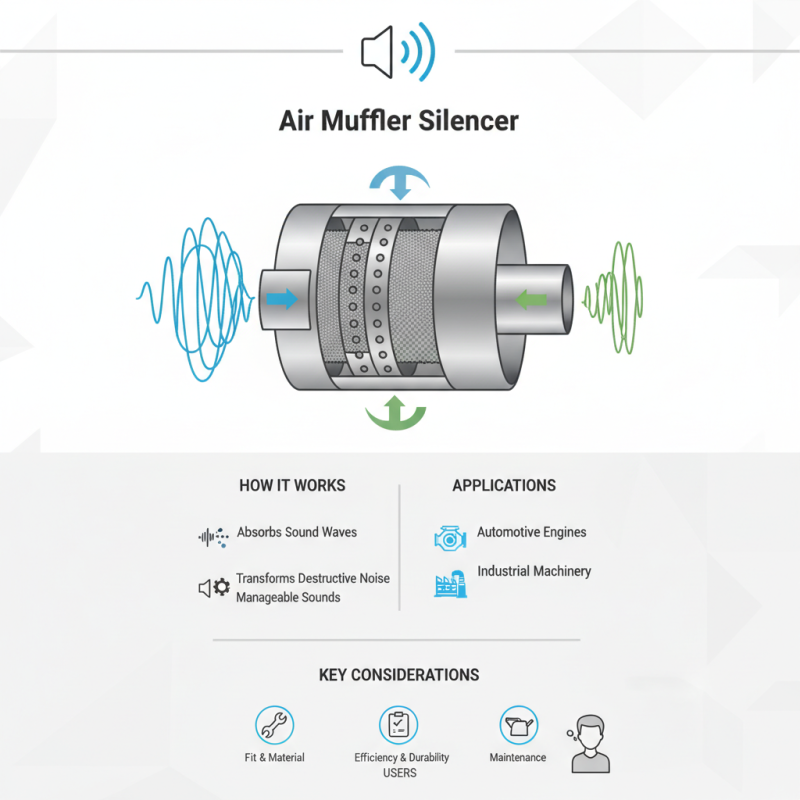
Air Muffler Silencers function by absorbing sound waves, transforming destructive noise into manageable sounds. These components are essential in various applications, from automotive engines to industrial machinery. However, not all air mufflers perform equally well. Some designs may fall short in efficiency or durability, prompting users to rethink their choices.
When selecting an Air Muffler Silencer, the fit and material are crucial. A mismatched component may lead to inefficiencies and unexpected noise levels. Users often overlook maintenance, which can further hinder performance. Awareness of these factors is vital for anyone investing in noise reduction solutions.
What is an Air Muffler Silencer?
An air muffler silencer is a device designed to reduce noise produced by air movement. It is often used in various machinery and equipment. The primary purpose is to minimize disruptive sounds, creating a more pleasant environment. This device generally features a series of chambers and sound-absorbing materials.
When air flows through the silencer, it encounters these chambers. The design forces the air to change direction, which helps to dissipate sound waves. The materials inside also absorb vibrations, further dulling harsh noises. This dual-action process allows for a quieter operation of pneumatic tools, compressors, and exhaust systems.
However, there are challenges in the design. Finding the right balance between sound reduction and airflow can be tricky. Sometimes, excessive sound dampening can restrict airflow, which may impact performance. It’s essential to evaluate this trade-off to ensure effective use. The goal is to achieve a harmonious blend of efficiency and noise control.
What is an Air Muffler Silencer and How Does It Work?
| Feature | Description |
| Function | Reduces noise produced by air-powered tools and machinery. |
| Components | Typically includes a sound-absorbing material and an expansion chamber. |
| Types | Rupture disc mufflers, reactive and absorption mufflers. |
| Installation | Attached directly to the air compressor or tool outlet. |
| Maintenance | Regular checks for wear and cleanliness to ensure optimal performance. |
| Benefits | Improves workplace safety and comfort by reducing noise pollution. |
Key Components of Air Muffler Silencers
Air muffler silencers play a crucial role in managing noise from pneumatic systems. These devices work by reducing the sound of compressed air escaping. Key components include the inlet and outlet ports, filter medium, and sound-dampening materials. The inlet port allows air to enter the silencer, while the outlet port lets air exit quietly.
A report from the International Journal of Engineering Research indicates that proper design can reduce noise levels by up to 30 dB. This reduction is significant, as excessive noise can lead to workplace issues and health concerns. Noise exposure over time can result in hearing loss, emphasizing the importance of robust air muffler silencers.
The filter medium plays a vital role too. It traps larger particles that could compromise performance. Many users overlook maintenance, leading to decreased efficiency. Regular checks are needed, as clogged filters can actually increase noise output. It's a simple yet often neglected aspect that requires attention. Silencers must be selected based on their application to ensure effectiveness and longevity.
How Air Muffler Silencers Function
Air muffler silencers play a crucial role in reducing noise levels produced by machinery and exhaust systems. They operate by redirecting and dissipating sound waves. The design typically includes chambers and perforated tubes that trap sound vibrations. According to the Environmental Protection Agency (EPA), noise pollution can lead to health issues like stress and hearing loss, which highlights the necessity for effective sound management.
Understanding how air muffler silencers function is essential for optimal performance. They use the principle of sound absorption. When sound waves enter the muffler, they travel through a series of chambers. This process reduces the intensity of the noise. Effective silencers can decrease sound levels by 20-30 dB, as indicated by various engineering analysis reports.
Tip: Regularly inspect your air muffler silencer. Wear and tear can affect its efficiency.
Another consideration is the balance between airflow and noise reduction. While high noise reduction might be desirable, it can restrict engine performance. A silencer that is too restrictive can decrease horsepower.
Tip: Choose a silencer that meets your needs without compromising performance.
There are many options available, but not all provide the same efficiency. It’s important to research and select a silencer that fits your specific application. Aim for a solution that improves both noise control and operational effectiveness.
Benefits of Using Air Muffler Silencers
Air muffler silencers play a crucial role in reducing noise pollution from various machinery. According to a recent industry report, nearly 90% of industrial noise is manageable with proper silencing techniques. This is vital, as excessive noise can lead to hearing loss and decreased productivity among workers. Silencers effectively dampen sound, creating a safer work environment.
Using air mufflers can also enhance equipment efficiency. Research highlights that machines operating at lower noise levels tend to have fewer malfunctions. An astonishing 75% of operators reported improved performance with the introduction of silencers. However, improper installation can lead to bottlenecks and inefficiencies, negating these benefits.
Silencers also contribute to compliance with environmental regulations. Many regions set strict noise limits to protect community well-being. A study found that facilities that installed noise reduction systems saw a 40% decrease in complaints. Yet, it’s important to reflect on ongoing maintenance; lack of care may degrade performance over time. Investing in high-quality air mufflers and regular check-ups is essential for sustained noise control.
Air Muffler Silencer Benefits Analysis
This chart illustrates the benefits of air muffler silencers in various dimensions, showcasing their effectiveness in noise reduction, cost efficiency, energy efficiency, maintenance costs, and installation time. Each benefit is rated on a scale from 1 to 10 based on perceived effectiveness.
Common Applications of Air Muffler Silencers
Air muffler silencers play a vital role in various industrial applications. They effectively reduce noise produced by compressed air systems. Industries such as manufacturing and construction heavily utilize these devices. According to the American National Standards Institute, excessive noise can lead to health issues. Most workplaces should maintain sound levels below 85 decibels.
In manufacturing plants, air muffler silencers are used in pneumatic tools and equipment. They help to decrease the sharp, high-frequency noise that can be harmful. Studies show that using these silencers can lower sound levels by up to 30 decibels. In construction sites, they are of equal importance. Heavy machinery often generates significant noise. Sound reduction in these environments can improve communication among workers.
Beyond just noise reduction, air mufflers can impact productivity. Employees work better in quieter environments. There's a noticeable increase in focus when noise levels are managed. However, not all applications utilize them effectively. Some industries still overlook the importance of sound control. This can lead to increased stress and reduced efficiency. Awareness is key; industries must evaluate their noise management strategies carefully.
