Top 10 Benefits of Using a CNC Mill in Your Projects?
In today's manufacturing landscape, the CNC mill has emerged as a transformative tool. According to a report by the International Federation of Robotics, the global CNC machine market is projected to reach $100 billion by 2025. This substantial growth indicates the increasing reliance on CNC mills across various industries.
The CNC mill offers unmatched precision and speed in production. It can manufacture complex parts with tight tolerances, often reducing the time and labor costs associated with traditional machining. A study from Deloitte reports that automation, including CNC technology, can boost productivity by up to 30%. This shift is crucial as businesses strive to remain competitive.
However, the adoption of CNC mills is not without challenges. Initial setup costs can be high, and there is a learning curve. Workers may need training to operate these machines efficiently. Despite these hurdles, the benefits of incorporating CNC milling into projects are clear. The results are smoother operations and higher quality outputs. The potential for innovation and advancement in manufacturing is immense, making the CNC mill an investment worth considering.
Benefits of Precision and Accuracy in CNC Milling
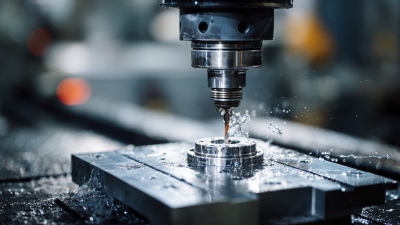
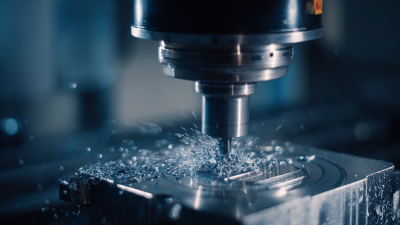
When it comes to precision and accuracy, CNC milling stands out in fabrication. The ability to create intricate designs with minute details is crucial. This technology cuts materials to exact specifications, ensuring parts fit perfectly. Such accuracy reduces the need for extensive reworking, saving time.
Choosing the right settings is vital. Small mistakes in tool selection or feed rates can lead to flawed pieces. Regularly calibrate your CNC machine for optimal results. Always double-check your dimensions before starting a project. This practice minimizes errors and enhances precision.
Sometimes, even with CNC, things go awry. Not every cut will be perfect, and unexpected issues may arise. Learning from these mistakes can lead to better results in future projects. Reflect on what didn’t work and adjust your approach accordingly. Embrace the CNC journey; it’s all part of the learning curve.
Enhanced Production Efficiency with CNC Mills
CNC mills are revolutionizing production efficiency in various industries. According to a report by the National Institute of Standards and Technology (NIST), CNC technology can increase productivity by up to 30%. This boost is largely due to automation, allowing machines to operate with minimal human intervention. Workers can focus on quality and troubleshooting instead of repetitive tasks.
Precision with CNC mills is a game changer. The tools are capable of producing intricate designs with tight tolerances. Industry trends indicate that projects can be completed 50% faster compared to traditional machining methods. However, this doesn't come without challenges. The initial setup time can be significant, and mistakes in programming can lead to costly errors.
Moreover, mistakes in CNC programming often arise from lack of experience or inadequate training. This leads to material waste, impacting overall efficiency. Reports show that up to 20% of production time may be lost due to these setbacks. Companies must invest in training and simulation software to mitigate these risks. Balancing speed and precision requires constant evaluation and adjustment, making CNC mills both an asset and a challenge in modern manufacturing.
Top 10 Benefits of Using a CNC Mill in Your Projects
| Benefit |
Description |
Impact |
| Increased Precision |
CNC mills provide superior accuracy compared to manual machining. |
Reduces material waste and improves product quality. |
| Higher Production Speeds |
Automation allows for faster processing times. |
Increases overall throughput and efficiency. |
| Consistent Output |
CNC mills produce uniform parts with minimal variation. |
Enhances quality control and brand reputation. |
| Complex Designs |
Capable of producing intricate geometries that are difficult to achieve manually. |
Expands design possibilities and innovation. |
| Reduced Labor Costs |
Less manual involvement required in machining processes. |
Lowers operational costs and improves workforce efficiency. |
| Material Versatility |
Works with a variety of materials including metals, plastics, and composites. |
Greater adaptability in project requirements. |
| Easy Replication |
Once a design is created, it can be easily replicated. |
Facilitates scale-up for production runs. |
| Enhanced Safety |
Minimizes human interaction with dangerous machinery. |
Reduces workplace accidents and injuries. |
| Quick Prototyping |
Rapid production of prototypes through CNC technology. |
Accelerates the development cycle for new products. |
| Streamlined Workflow |
Integrates easily into existing manufacturing processes. |
Improves overall operational efficiency. |
Versatility: Applications of CNC Milling Across Industries
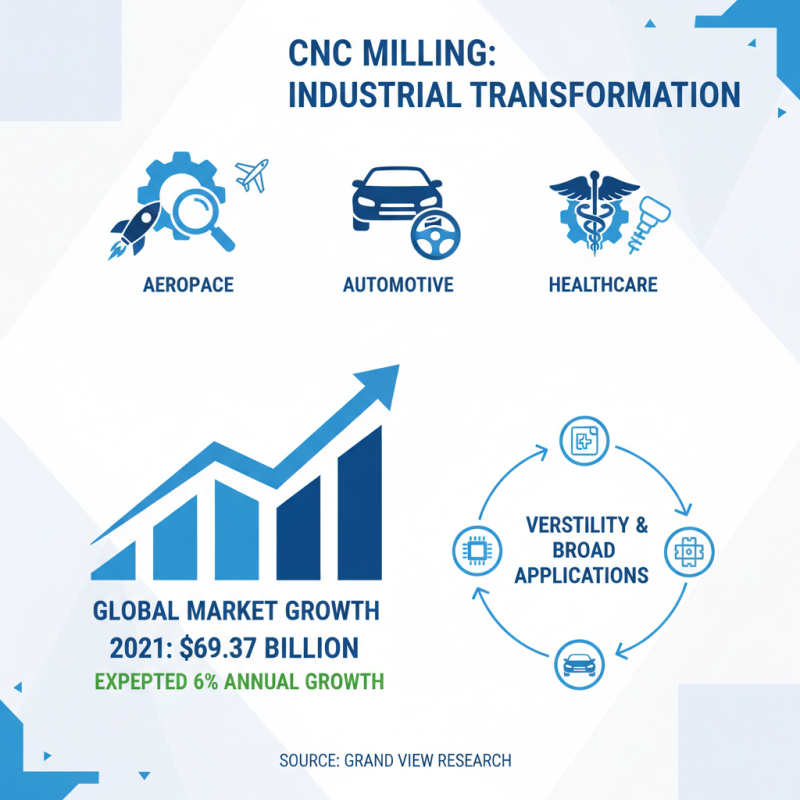
CNC milling has transformed multiple industries, thanks to its versatility. This technology serves sectors like aerospace, automotive, and healthcare. According to a market analysis by Grand View Research, the global CNC machining market size was valued at $69.37 billion in 2021 and is expected to grow by 6% annually. This growth reflects the broad applications of CNC milling.
In aerospace, precision is critical. CNC mills create complex parts that meet strict specifications. For instance, the use of CNC technology reduces the risk of human error. This high accuracy can also limit waste, though achieving consistent quality often presents challenges. The automotive industry benefits similarly. Components such as engine parts require exact dimensions, and CNC milling delivers results that manual machining cannot match.
Healthcare applications are on the rise, too. Custom implants and prosthetics are now often produced using CNC mills. This customizability is a game changer. However, the technology still requires skilled operators to optimize settings. Therefore, while CNC milling can simplify processes, it also poses certain difficulties in training and setup. Each industry faces unique hurdles, reflecting the need for ongoing innovation and improvement.
Cost-Effectiveness: Saving Time and Resources with CNC Technology
Cost-Effectiveness is a significant advantage of using CNC mills in projects. According to industry reports, CNC technology can reduce manufacturing time by up to 50%. This reduction leads to faster project turnaround times. Quicker project completion allows businesses to take on more clients and increase profits.
Moreover, CNC mills minimize material waste. Studies show that traditional machining processes often waste up to 40% of materials. In contrast, CNC machines can enhance cutting precision, which reduces scrap. This saving contributes directly to lower costs. A survey found that businesses using CNC machinery reported a 20% decrease in overall production costs.
However, transitioning to CNC technology may require initial investment. This step could feel daunting for smaller businesses. Yet, the long-term savings typically outweigh these upfront costs. Companies should evaluate their unique needs and long-term goals. Balancing immediate expenses with potential efficiency gains is crucial. As the industry evolves, reflecting on these investment decisions can lead to smarter strategies.
Improved Design Flexibility and Customization Options via CNC Milling
CNC milling has revolutionized how we approach design flexibility. With its precise control, it allows for intricate shapes and custom features. You can easily adjust dimensions and create unique designs that traditional methods struggle to achieve. This capability fosters creativity, enabling builders to explore innovative ideas without limitation.
Moreover, customization options are abundant with CNC milling. You can tailor each project to specific requirements, no matter how complex. For example, producing a part with varied thicknesses or unique engravings is simple. However, balancing complexity with manufacturability can be challenging. Designers often grapple with whether a design is too intricate to produce effectively. Small miscalculations may lead to significant design flaws, pushing for constant attention to detail.
Ultimately, CNC milling empowers you to bring your visions to life. Yet, it's vital to reflect on the challenges it brings. Managing expectations while striving for precision can often feel overwhelming. Each project is a learning opportunity. Embracing the imperfections may lead to growth and deeper understanding in the CNC realm.