How to Choose the Best Laser Cutter for Your DIY Projects in 2023
In 2023, the surge in DIY projects has led to an increasing demand for high-quality laser cutters among hobbyists and professionals alike. According to a recent report by the Society of Manufacturing Engineers, the global laser cutting market is projected to reach $4.2 billion by 2025, reflecting the growing interest and accessibility of personal fabrication tools. Laser cutters provide precision, versatility, and efficiency, making them indispensable for a wide array of applications, from woodworking to intricate metal designs.
As Jerry Thompson, a leading expert in laser technology, notes, “Choosing the right laser cutter can dramatically enhance your creative potential and operational efficiency.” His insights underscore the necessity for users to consider various factors such as power, safety features, and material compatibility when selecting a laser cutter for their DIY projects. In a market flooded with options, understanding these key elements can empower creators to make informed decisions that align with their specific needs and project goals.
Understanding Your DIY Project Requirements for Laser Cutting
Choosing the right laser cutter for your DIY projects requires a clear understanding of your specific needs and goals. According to a recent industry report by ResearchAndMarkets, the global laser cutting market is expected to grow by over 6% annually, highlighting the increasing popularity and accessibility of laser cutting technology. Before you invest in a machine, it’s crucial to assess the types of materials you’ll be working with—such as wood, acrylic, or textiles—as well as the intricacy of your designs. For example, if your projects involve detailed engravings, you’ll want to choose a laser cutter with a higher wattage for enhanced precision and efficiency.
**Tip:** When evaluating your requirements, consider the thickness of the materials you plan to cut. Most entry-level laser cutters handle materials up to ¼ inch thick, while more advanced models can cut through materials up to an inch or more. This will directly impact the size of the machine and the type of laser technology you should choose.
Furthermore, it's important to reflect on the volume of work you expect to take on. A survey by IndustryWeek indicated that 70% of small manufacturers want flexibility in their machinery for various projects. If you’re planning to produce large quantities or intricate designs frequently, investing in a machine with faster cutting speeds and better operational capabilities will pay off in the long run.
**Tip:** Always prioritize a machine that offers ease of use and support for design software, as user-friendly interfaces can significantly shorten the learning curve and enhance productivity.
Key Features to Look for in a Laser Cutter
When selecting a laser cutter for your DIY projects in 2023, it's essential to focus on key features that will enhance your crafting experience. One of the most critical aspects to consider is the power of the laser. A higher wattage typically equates to faster cutting and engraving capabilities, allowing you to work with a variety of materials such as wood, acrylic, and leather. For hobbyists, a laser cutter with a power range of 30 to 100 watts is generally sufficient for most projects, providing a balance between performance and cost.
Another important feature to evaluate is the cutting area or bed size. Depending on the scale of your projects, a larger workspace can be advantageous, as it allows for more extensive designs without the need for multiple cuts. Additionally, consider the software compatibility of the laser cutter. User-friendly software that supports various file formats will simplify the design process and enable you to create intricate patterns with ease. Lastly, look for features such as adjustable speed settings and focus control that can give you more precision in your work, ensuring clean and accurate results regardless of the material you choose.
Comparing Different Types of Laser Cutting Technologies
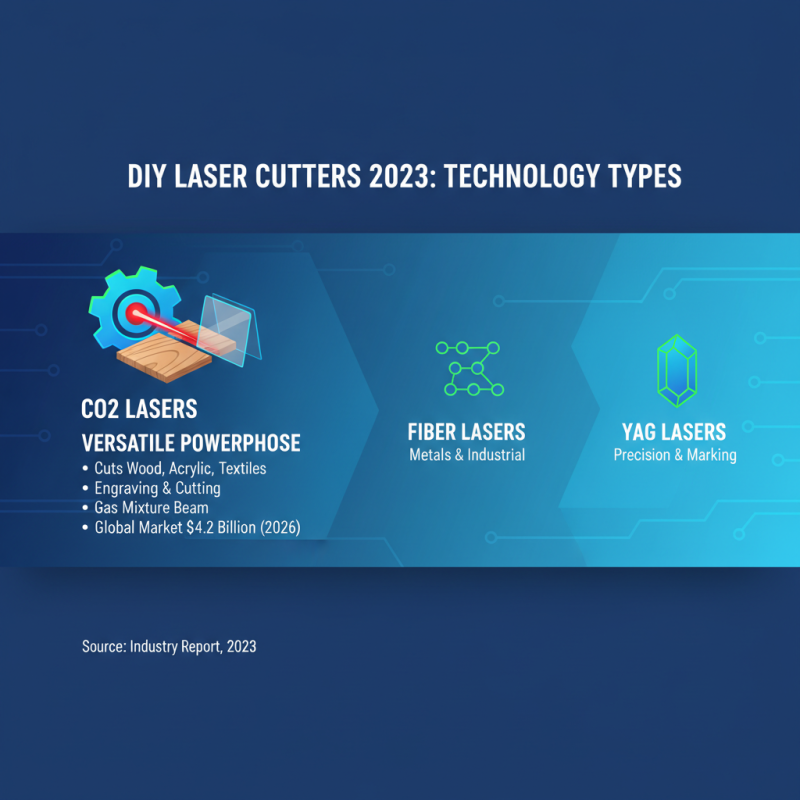
When choosing the best laser cutter for your DIY projects in 2023, understanding the different types of laser cutting technologies is crucial. The three primary technologies are CO2 lasers, fiber lasers, and YAG lasers. CO2 lasers are renowned for their versatility and are capable of cutting through a wide range of materials, including wood, acrylic, and textiles. According to a recent industry report, the global CO2 laser market is projected to reach $4.2 billion by 2026, highlighting its popularity among hobbyists and professionals alike. This technology uses a gas mixture that produces a coherent beam and is ideal for engravings and cutting applications.
In contrast, fiber lasers have gained traction for their efficiency and speed, especially in cutting metals such as stainless steel and aluminum. They boast higher cutting speeds and energy efficiency, as they convert electricity directly into a laser beam, which also results in a lower operational cost. The market for fiber lasers is expected to grow significantly, with projections indicating a compound annual growth rate (CAGR) of over 10% in the coming years. YAG lasers, while less common, are also effective for specific applications, particularly in industrial settings where high precision is required.
Choosing the right laser cutter involves evaluating the materials you plan to work with and the types of projects you intend to undertake. By understanding the strengths and weaknesses of these laser technologies, DIY enthusiasts can make informed decisions that align with their creative aspirations and budget considerations.
Budget Considerations: Finding a Laser Cutter That Fits
When selecting a laser cutter for your DIY projects in 2023, budget considerations are paramount. According to a recent report from Market Research Future, the global laser cutting machine market is expected to grow significantly, reaching approximately $9 billion by 2025. This surge is partly due to the increasing accessibility of laser cutting technology, resulting in a broader range of options for hobbyists and small businesses. The initial investment for a reliable laser cutter can vary widely, often ranging from $200 to over $5,000, depending on the features and capabilities of the machine.
In 2023, it is crucial to strike a balance between cost and functionality. For those on a tighter budget, entry-level models often come equipped with basic cutting features suitable for materials like wood and acrylic, making them ideal for simple projects. However, investing a bit more can afford you enhanced precision, faster cutting speeds, and the ability to work with a wider variety of materials. A survey from the FabLab community highlighted that users who invested in mid-range machines noted a significant increase in both productivity and project scope, emphasizing how a budget-conscious yet well-thought-out purchase can ultimately elevate your DIY capabilities.
How to Choose the Best Laser Cutter for Your DIY Projects in 2023 - Budget Considerations: Finding a Laser Cutter That Fits
| Model |
Laser Type |
Cutting Area (mm) |
Max Power (W) |
Price Range (USD) |
Recommended Use |
| Entry Level Cutter |
CO2 |
300 x 200 |
40 |
200 - 400 |
Hobby Projects |
| Mid-Range Cutter |
CO2 |
600 x 400 |
60 |
500 - 800 |
Small Business |
| Professional Cutter |
Fiber |
1000 x 600 |
100 |
1200 - 2000 |
Industrial Use |
| High-End Cutter |
CO2 |
1200 x 800 |
150 |
2500 - 4000 |
Heavy-Duty Projects |
Evaluating User Reviews and Brand Reputation for Laser Cutters
When selecting a laser cutter for your DIY projects in 2023, evaluating user reviews and brand reputation is crucial. A recent industry report indicated that up to 80% of potential buyers rely on online reviews before making a purchase decision. This highlights the importance of scrutinizing feedback from those who have firsthand experience with the products. Look for patterns in reviews that discuss reliability, ease of use, and customer service. High ratings from verified users often indicate a trustworthy brand that prioritizes quality and customer satisfaction.
Tips: Pay attention to user-generated content on forums and social media, as well as detailed reviews on e-commerce sites. These platforms can provide insights into performance over time, which is often missing in promotional material. Additionally, consider brands with a history of consistent performance and a transparent approach to problem-solving. A strong reputation often correlates with better long-term investment, offering peace of mind in your purchase.
Furthermore, conducting a bit of research on the brand’s overall standing in the industry can lead to more informed choices. Reports show that manufacturers with positive reputations tend to emphasize innovation and customer feedback in their product development. This is particularly important in the rapidly evolving laser cutting market, where technology continuously advances. By choosing a reputable brand backed by positive user reviews, you are likely to enhance your DIY project experiences significantly.
Comparison of Laser Cutter Features for DIY Projects in 2023