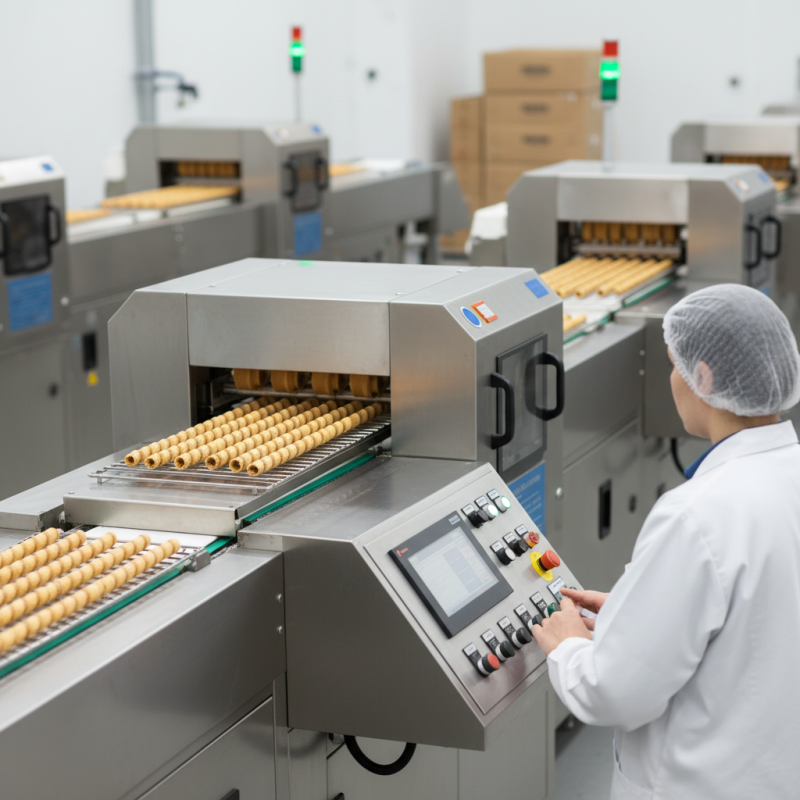
How to Choose the Best Wafer Roll Machine for Your Business?
Choosing the right Wafer Roll Machine for your business can be challenging. The market offers various machines with different features. Understanding your needs is crucial.
Consider your production volume and the types of wafer rolls you want. A machine that fits your needs can significantly impact your efficiency. Many machines fail to deliver consistency. It’s important to consider the quality as well.
Evaluate the machines available carefully. Some may seem appealing but could lack durability. Reading reviews and seeking testimonials can help. Remember, investing in the right Wafer Roll Machine sets the foundation for your success.
Types of Wafer Roll Machines Available in the Market
When choosing a wafer roll machine, understanding the types available in the market is essential. There are several categories of machines. Some are manual, while others are fully automatic. Manual machines require more hands-on effort. They are often less expensive but may slow down production. Automatic machines save time and labor. They offer consistent results, which can be crucial for larger operations.
Another type is the gas-operated wafer roll machine, which heats the cooking plates quickly. These can produce crispy rolls in a short amount of time. Electric machines, on the other hand, are convenient and easy to use. However, they may take longer to reach the desired temperature. Each type has its pros and cons that need careful consideration.
Consider your production capacity and budget. It might be tempting to choose the cheapest option. However, investing in quality can lead to better output and fewer issues later. Every machine has a learning curve. Some operators might struggle initially. It’s important to reflect on your operational needs and workflow. This approach will help avoid costly mistakes.
Key Features to Consider When Selecting a Wafer Roll Machine
When selecting a wafer roll machine, several key features are crucial for business success. First, consider the production capacity. Machines vary significantly, with output ranging from 50 to 2000 pieces per hour. A higher capacity is beneficial for meeting demand. However, businesses must assess their average sales to avoid over-commitment. Investing in a machine too large can lead to unnecessary costs.
Another important feature is the machine's flexibility. Some machines can produce various wafer sizes and flavors. This versatility can meet diverse consumer preferences. A report from the Food Processing Industry indicates that 70% of consumers prefer unique flavors over traditional ones. Thus, having the option for customization can enhance customer satisfaction and boost sales.
Energy efficiency is also a vital consideration. Many machines consume a significant amount of energy, impacting operating costs. A study by the National Association of Manufacturers found that improved energy efficiency can reduce costs by approximately 20%. Look for machines with energy-saving features. Additionally, assess the ease of cleaning and maintenance. Machines that are difficult to maintain can lead to downtime and increased operational challenges. Balancing these factors is essential for making the right decision.
Assessing Production Capacity and Efficiency for Your Business Needs
When assessing production capacity and efficiency, several factors are critical for selecting a wafer roll machine. Production capacity defines how much product can be made in a given time frame. According to industry reports, high-efficiency machines can produce up to 300 kilograms of wafer rolls per hour. However, not all businesses need such high output. Understanding your actual demand is crucial.
Efficiency goes beyond just output. It also includes energy consumption and waste generation. Some machines might produce 250 kilograms but consume more energy than others producing 300 kilograms. You must also consider maintenance needs. Machines requiring frequent repairs can lead to production downtime, impacting profitability. Research indicates that maintenance can account for 15% of production costs.
Investing in a machine that perfectly fits your business needs is essential but challenging. Many companies overestimate their needs. A machine that is too large can lead to unnecessary energy costs and wasted resources. Balancing capacity and efficiency is vital for sustainable growth. Evaluate your current and future needs carefully. This reflection can help avoid costly mistakes.
Evaluating Costs: Budgeting for Your Wafer Roll Machine Purchase
When it comes to purchasing a wafer roll machine, budgeting is key. Industry data shows that the price range can vary significantly, from $5,000 to over $50,000. This notably depends on production capacity and machine features. For small businesses, it might be tempting to go for the cheapest option. However, lower-priced machines may compromise on quality and durability.
Operating costs should also be a consideration. Maintenance costs often go unnoticed. Data indicates that regular maintenance can incur costs of up to 15% of the initial purchase price each year. For example, a machine bought for $10,000 could lead to $1,500 in annual upkeep. Additionally, energy consumption plays a role in overall expenses; more efficient models can save money in the long run.
Finally, consider the long-term return on investment. A more expensive but efficient machine may yield higher production volumes. This could lead to increased sales and profits. Weigh these factors carefully; sometimes the best choice isn't the most budget-friendly one.
How to Choose the Best Wafer Roll Machine for Your Business? - Evaluating Costs: Budgeting for Your Wafer Roll Machine Purchase
| Feature | Description | Estimated Cost (USD) | Budget Consideration |
| Production Capacity | Number of wafers produced per hour | $5,000 - $15,000 | Consider your production needs |
| Machine Size | Dimensions of the machine | $3,000 - $7,000 | Ensure it fits your workspace |
| Energy Efficiency | Electricity consumption of the machine | $1,000 - $3,000 | Look into long-term savings |
| Ease of Use | User interface and controls | $500 - $2,000 | Minimize training costs |
| Maintenance Requirements | Frequency and cost of maintenance | $1,000/year | Factor in ongoing costs |
Maintenance and Support: What to Look For in a Supplier
When selecting a wafer roll machine, maintenance and support from the supplier is crucial. Evaluate how often the machine requires maintenance. Some machines may need frequent servicing, which can impact your production. A reliable supplier should offer clear maintenance schedules and support.
Look for suppliers that provide comprehensive training. This helps your team operate the machine efficiently. Inquire about their customer service responsiveness. A good supplier should be easy to reach and address your concerns promptly. Delays in support can lead to production downtime.
Consider warranty options and parts availability. It’s important to know how long the warranty lasts. Replacement parts should come quickly when needed. Some suppliers may have long lead times for parts. Reflect on whether that could affect your business operations. A partner who offers swift support can make a significant difference.
Comparison of Key Features in Wafer Roll Machines