2026 How to Choose the Right Ltcc Diplexer for Your Needs?
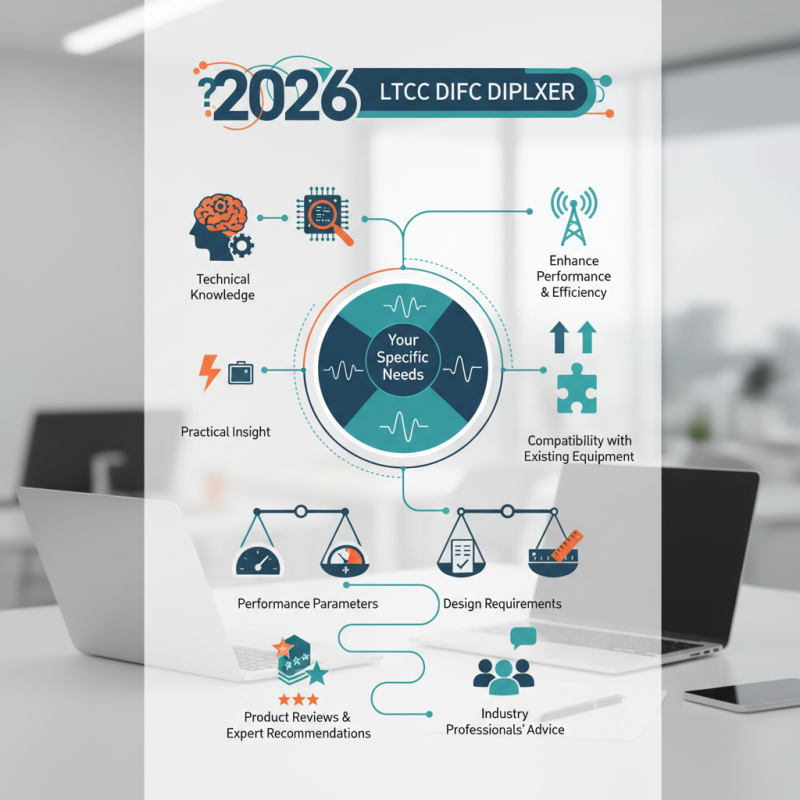
Choosing the right Ltcc Diplexer can impact your project significantly. As Dr. Jane Thompson, a renowned expert in RF engineering, stated, “Selecting an LTCC diplexer requires a blend of technical knowledge and practical insight.” This assertion underlines the complexity involved in the decision-making process.
When opting for an LTCC diplexer, understanding your specific needs is crucial. Various factors come into play, such as frequency ranges, power handling, and signal integrity. A well-suited diplexer will enhance performance and efficiency in communication systems. However, many users overlook the importance of compatibility with existing equipment.
It is essential to consider both performance parameters and design requirements. Not all diplexers are created equal. Some may meet basic specifications but fall short of reliability under certain conditions. This realization may lead you to re-evaluate your options and dig deeper into product reviews and expert recommendations. Seeking advice from industry professionals will add valuable perspectives, ensuring you make a more informed decision.
Understanding the Functionality of LTCC Diplexers
LTCC diplexers serve a crucial role in RF communication systems. They enable simultaneous transmission and reception of signals across different frequency bands, maximizing efficiency. These devices utilize low temperature co-fired ceramic (LTCC) technology, which provides advantages like high thermal stability and low loss. According to a recent industry report, the demand for LTCC materials in telecommunications is projected to grow at a CAGR of 11% through 2026.
Understanding how LTCC diplexers operate is vital for selecting the right one for your application. They function by dividing incoming signals into distinct frequency bands. A diplexer usually integrates a low-pass filter and a high-pass filter. Their performance can vary based on parameters like insertion loss and isolation. For example, a typical insertion loss in diplexers ranges from 0.5 dB to 2 dB. Buyers should be aware that these values can significantly impact overall system performance.
Performance metrics can be misleading without context. An LTCC diplexer with low insertion loss may not suit an application requiring high frequency isolation. It’s essential to assess specific needs against the data provided. Understanding these nuances can lead to better decision-making when choosing the right diplexer.
Key Parameters to Consider When Selecting an LTCC Diplexer
When selecting an LTCC diplexer, key parameters greatly influence performance. Frequency ranges are critical. Ensure your diplexer covers the specific frequencies required for your application. Mismatched frequencies can lead to signal loss and decreased efficiency.
Insertion loss is another important factor. A low insertion loss indicates better signal transmission, which is vital in communication systems. Measure the insertion loss across the required bandwidth to guarantee optimal functioning. Additionally, consider the isolation between ports. High isolation helps prevent interference between different signal paths. Without adequate isolation, you might face degraded performance.
Lastly, size and footprint should align with your system's design. In compact environments, the diplexer’s size can be a limiting factor. It’s crucial to balance performance with physical constraints. Regularly reviewing these parameters will enhance your selection process and ensure your LTCC diplexer meets your needs effectively. It's a necessary practice to reflect on your choices, ensuring they align with your project requirements.
2026 LTCC Diplexer Selection Parameters
Comparing Different Types of LTCC Diplexers Available in the Market
When it comes to selecting the right LTCC diplexer, understanding the different types available in the market is crucial. LTCC diplexers utilize low-temperature co-fired ceramics, offering excellent performance in communication systems. For instance, the global LTCC market is expected to grow at a CAGR of 8.3%, reaching $5.7 billion by 2026. This growth is driven by increased demand in RF and microwave applications.
One common type is the dual-band diplexer. It separates signals into two frequency bands. This type is useful in applications requiring efficient separation of conflicting signals. Another option is the multi-band diplexer, which can handle more than two frequency ranges. Multi-band options are gaining traction, particularly in the telecommunications sector, where multiple frequency bands are in use.
**Tips:** Consider the frequency ranges you need. Ensure the diplexer meets these specifications. Also, assess the insertion loss; lower levels indicate better performance. Lastly, always examine the environmental resistance of the diplexer since durability may vary. This attention to detail can make a significant difference in long-term reliability.
Evaluating the Performance Specifications of LTCC Diplexers
When evaluating the performance specifications of LTCC diplexers, several factors come into play. Frequency response is crucial. A diplexer must effectively handle the specified frequency bands. Reports indicate that a diplexer can cover a bandwidth of 200 MHz to several GHz, depending on the design. Ensuring minimal insertion loss can markedly improve overall system efficiency, with acceptable levels often cited as below 1 dB in high-performance applications.
Additionally, consider isolation. It is pivotal to have high isolation between input ports to prevent cross-talk. High-quality LTCC diplexers can achieve isolation levels above 30 dB. This performance is essential in applications where signal clarity is paramount, like telecommunications. Typical data suggests that poor isolation can lead to a significant degradation in signal quality.
Tips: Always cross-check specifications with peer-reviewed studies. Look for independent lab results validating the performance claims. Additionally, assess the thermal stability of the diplexer. Performance can vary with temperature fluctuations, impacting reliability in real-world scenarios. Ensuring a diplexer meets stringent environmental requirements is as vital as its electrical specs. It's worth remembering that specifications can sometimes be optimistic; real-world testing can provide a more truthful perspective on performance.
Identifying Your Specific Application Needs for LTCC Diplexers
When choosing the right LTCC diplexer, understanding your application needs is crucial. LTCC (Low-Temperature Co-fired Ceramic) diplexers are widely used in telecommunications and RF applications. The performance varies based on the design, frequency range, and insertion loss. According to a recent market analysis, around 45% of RF communication systems report inconsistent performance due to improper diplexer selection.
Identifying application requirements involves exploring critical factors such as frequency bands and power handling capacity. In some cases, users may need a diplexer that excels in low insertion loss, while others might prioritize size and form factor. For instance, a wireless communication system might benefit from a diplexer that supports multiple channels without significant signal degradation.
Tips:
Evaluate your budget alongside performance needs. Higher-quality diplexers may yield better long-term reliability, impacting total cost over time. Keep in mind that not all diplexers fit every scenario. Test different options in your unique environment to gauge performance before finalizing your choice.
Consider the environmental conditions your diplexer will face. High humidity or extreme temperatures could influence the longevity and effectiveness of the component. Always refer to manufacturer specifications, as these can provide insights into operational limits and expected performance.
2026 How to Choose the Right Ltcc Diplexer for Your Needs?
| Specification | Description | Application Area | Frequency Range (GHz) | Insertion Loss (dB) | Return Loss (dB) |
| Voltage Rating | Determines the maximum voltage the diplexer can handle. | Telecommunications | 2.0 - 6.0 | 0.5 | 20 |
| Isolation | The ability of the diplexer to prevent interference between channels. | RF Communication | 0.8 - 2.5 | 0.6 | 18 |
| Size | Physical dimensions of the diplexer. | Satellite Communications | 1.0 - 3.0 | 0.7 | 15 |
| Temperature Stability | Performance consistency over varying temperatures. | Industrial Automation | 0.5 - 2.0 | 0.8 | 20 |
