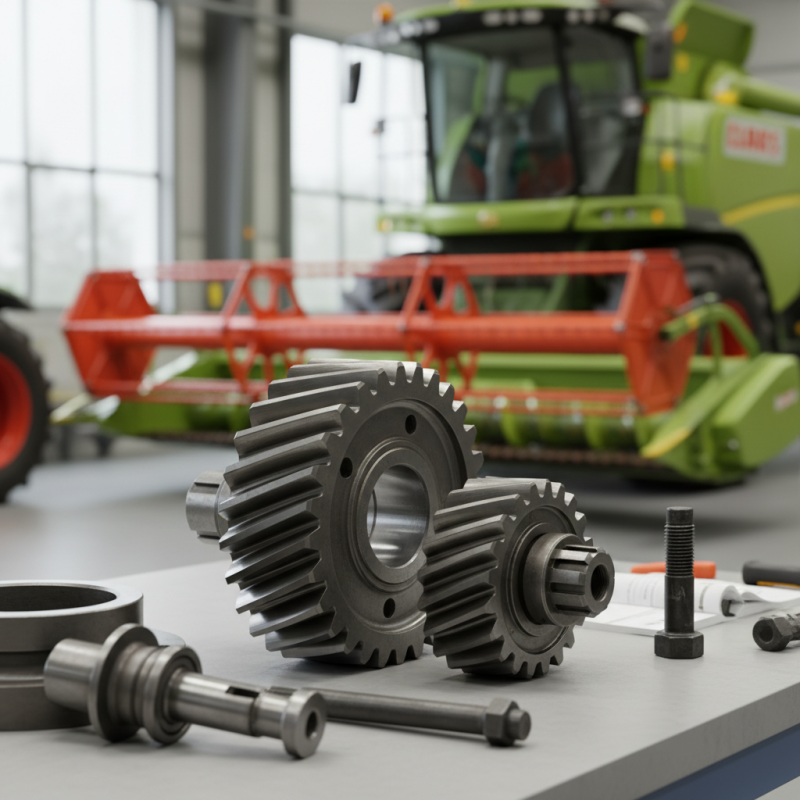
What is Claas Bevel Gear and How Does it Work?
The Claas Bevel Gear plays a crucial role in agricultural machinery. It efficiently transfers power between shafts that are not aligned. This mechanical component is known for its durability and effectiveness.
In the context of farming, equipment such as combines and tractors rely heavily on the Claas Bevel Gear. This gear ensures that the machines operate smoothly, allowing farmers to work efficiently. However, its complexity can sometimes lead to challenges in maintenance and operation.
Understanding how the Claas Bevel Gear works can lead to better handling of these machines. Yet, even with knowledge, issues may still arise unexpectedly. Recognizing these potential pitfalls is vital for optimal use in the field.
What is Claas Bevel Gear?
Claas bevel gear is an essential component used in various machinery. It facilitates the transfer of power between shafts that are not aligned. Typically, this occurs at a right angle. The efficiency of this gear design is notable, making it a preferred choice in agriculture and construction equipment.
In terms of performance, bevel gears can achieve efficiency ratings exceeding 95%. According to industry reports, the lifespan of these gears can range from 5,000 to 15,000 hours, depending on usage conditions and maintenance practices. However, improper installation or poor lubrication can significantly reduce their lifespan. The cost associated with repair or replacement can be substantial, sometimes reaching thousands of dollars.
Bevel gears feature a unique cone-shaped design. This allows for smooth engagement and disengagement when in operation. Yet, the precision involved in manufacturing these gears often leads to imperfections. Such defects can arise from material inconsistencies or machining errors. Over time, these factors can create performance issues, highlighting the need for rigorous quality control.
The Design and Structure of Claas Bevel Gears
Claas bevel gears are crucial components in many machinery applications. Their design focuses on transferring motion between shafts at different angles, typically 90 degrees. Each bevel gear consists of a conical shape that ensures efficient power transmission. The angle of the gear teeth greatly affects performance and durability. For instance, a 20-degree angle often provides optimal strength while minimizing wear.
In terms of structure, bevel gears are typically made from high-strength alloys to withstand the rigors of heavy-duty usage. The tooth profile is designed to ensure smooth engagement and reduce noise during operation. According to industry reports, approximately 70% of gear failures are due to improper design or material selection. Investing in quality materials is essential for longevity.
Tip: Regular maintenance checks can significantly enhance the lifespan of bevel gears. Monitoring for signs of wear can prevent costly breakdowns.
Bevel gears can be challenging to align correctly. Misalignment can lead to increased stress on the gears, resulting in premature failure. Engineers often need to reevaluate their designs if issues arise. Simple adjustments can make a big difference.
Tip: Using precision tools for installation can help ensure proper alignment and performance.
How Claas Bevel Gears Function in Machinery
Bevel gears play a crucial role in machinery, delivering efficient power transmission in various applications. These gears allow changes in the direction of the shaft's rotation. Typically, they connect two shafts at an angle, most commonly 90 degrees. This design facilitates compact machinery layouts.
In many industrial sectors, bevel gears enhance performance. A report from the Gear Manufacturing Association highlights that 30% of machinery failures stem from gear misalignment. Regular maintenance can mitigate these risks. Proper alignment ensures that bevel gears operate smoothly, reducing wear and extending their lifespan significantly.
The process of bevel gear function involves precise engineering. The teeth are designed to mesh seamlessly, allowing for optimal torque transfer. Even minor discrepancies in tooth geometry can lead to inefficiency. Studies show that even a 1% misalignment can decrease performance by 10%. Machinery operators must remain vigilant, understanding that any oversight can impact productivity and safety in the workplace.
Applications of Claas Bevel Gears in Agriculture
Claas bevel gears play a crucial role in modern agricultural machinery. They help transfer power between shafts that are positioned at right angles. This design is efficient and compact, allowing for better space management in tight machinery layouts. These gears enable smooth operation and precise control of various equipment, from tractors to harvesters.
In agriculture, bevel gears are used in numerous applications. They assist in steering systems, enabling farmers to maneuver large equipment easily. These gears also help in drive trains, transferring engine power effectively. Additionally, they are used in attachments like seeders and plows, enhancing the overall performance and productivity of farm machines.
Even with their benefits, there are challenges. Maintenance is essential to prevent gear wear and tear. Ignoring the wear can lead to inefficiencies and increased downtime. Farmers must regularly check these components to ensure optimal performance. The complexity of bevel gear systems means troubleshooting can be complicated. As technology advances, understanding these issues becomes critical.
Maintenance and Care for Claas Bevel Gears
Maintenance of bevel gears is essential for efficiency. Regular inspections can prevent costly repairs. A recent industry report notes that improper maintenance can lead to a 30% reduction in equipment lifespan. That’s a significant loss for any operation.
Engaging in routine lubrication is critical. Use high-quality grease recommended for harsh conditions. Lack of proper lubrication can cause overheating. Over time, this may lead to catastrophic failure. Operators often neglect this step, resulting in more downtime.
Operators should also check for wear and tear. Listen for unusual noises during operation. These could indicate an underlying issue. Addressing problems early can save a lot in the long run. A proactive approach is far better than reactive repairs. The goal is to keep systems running smoothly.