10 Essential Tips for Choosing the Right Cylindrical Gearbox?
Choosing the right Cylindrical Gearbox is crucial for optimal machinery performance. The global gearbox market is projected to reach $30 billion by 2025. This growth emphasizes the importance of selecting a reliable product. A cylindrical gearbox plays a vital role in various applications, from automotive to industrial machinery.
When considering a cylindrical gearbox, understanding key specifications is essential. Factors such as torque capacity, gear ratio, and material quality significantly impact performance. According to recent industry reports, up to 70% of gearbox failures occur due to improper selection. This highlights the need for careful evaluation.
Moreover, the evolving technology in gear manufacturing demands up-to-date knowledge. A well-chosen cylindrical gearbox can enhance efficiency and reduce operational costs. However, many overlook critical details, leading to costly mistakes. Therefore, it is imperative to follow best practices in selection.
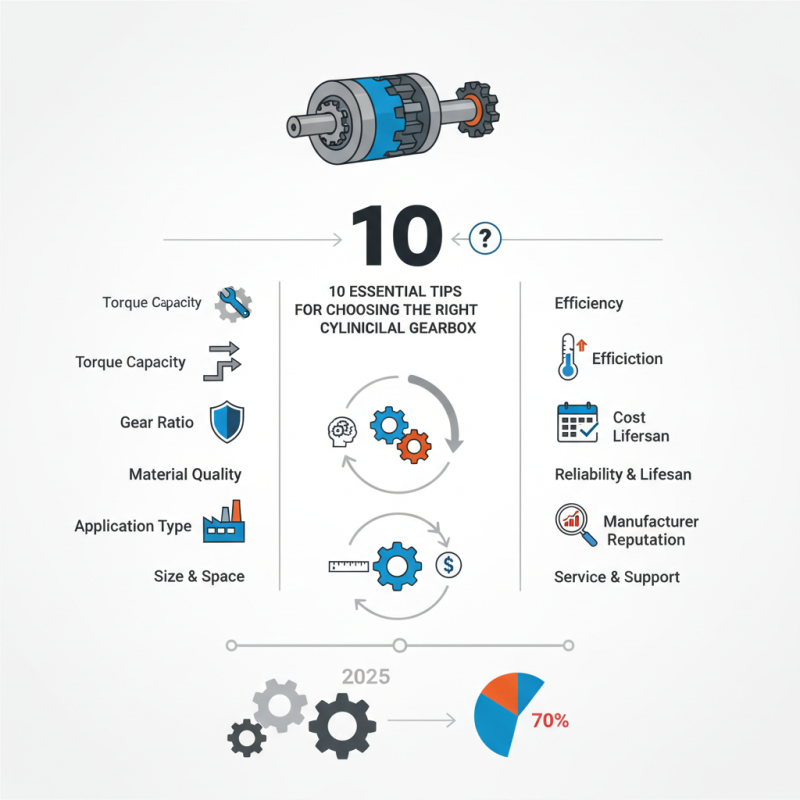
Key Factors to Consider When Selecting a Cylindrical Gearbox
Choosing the right cylindrical gearbox involves several key factors. A gearbox's efficiency, load capacity, and operational environment are critical. For instance, a gearbox operating under high temperatures might require specific materials to ensure durability. A study by the Gear Research Institute highlights that the right gearbox can improve system efficiency by up to 20%. This efficiency boost is vital for energy-saving initiatives across various industries.
When it comes to load capacity, many users underestimate the importance of selecting a gearbox that can handle peak loads. Often, manufacturers recommend gearboxes with a factor of safety, typically around 1.5 to 2 times the expected load. This precaution helps prevent premature wear. Consider the output torque and its relation to the motor specifications. Inadequacies here can lead to performance issues.
Evaluate your operational conditions. Dust, moisture, and vibrations can impact gearbox longevity. Durability ratings are essential; a gearbox that’s rated for high cycle counts is a safer choice. It’s not uncommon for companies to overlook these ratings, resulting in costly repairs or replacements. Always check industry reports for the latest data and specifications. These insights aid in making informed decisions.
Understanding the Load Requirements for Your Application
Understanding the load requirements for your application is crucial when selecting a cylindrical gearbox. Different applications generate varying load profiles. These may include static and dynamic loads. It’s vital to analyze these factors carefully. Consider factors such as torque, speed, and duty cycle. Calculate the maximum load your gearbox will face during operation.
The gear ratio is another critical detail. It influences efficiency and torque transmission. Select a ratio that matches your application's needs. If the ratio is too high or too low, it can lead to mechanical stress. Ensure that the gearbox can handle unforeseen loads, as this can prevent premature failure.
In case of uncertainty, consulting with a specialist can provide additional insights. Load analysis may reveal complexities that are not immediately apparent. Costs may increase, but investing in the right gearbox prolongs equipment life. Reflecting on your application’s specifics will yield the best outcomes.
Evaluating Gearbox Materials and Construction Quality
When choosing a cylindrical gearbox, evaluating materials and construction quality is paramount. The quality of materials directly affects performance and durability. Aluminum, for instance, is lightweight and resistant to corrosion, making it a popular choice. However, steel offers superior strength and longevity. It’s essential to weigh the pros and cons of each material concerning your specific application.
Consider the construction methods employed in the gearbox. Machined components typically provide a higher level of precision compared to cast parts. Precision impacts not just efficiency but also the lifespan of the gearbox. Look for gearboxes with tight tolerances to minimize wear and tear.
Tips for your selection process: **Inspect the material specifications closely.** Ensure that they meet industry standards. **Request detailed construction data.** Knowledge of the manufacturing process can reveal the quality. It's crucial to ask questions, and don't skim over documentation. Reflect on your specific needs and operational conditions. Remember, taking the time to make an informed decision can save resources in the long run.
10 Essential Tips for Choosing the Right Cylindrical Gearbox - Evaluating Gearbox Materials and Construction Quality
| Criteria | Considerations | Examples |
| Material Type | Assess material properties such as strength and wear resistance. | Alloy steel, Cast iron, Plastic composites |
| Construction Quality | Look for precise machining and finishing to ensure longevity. | CNC machining, Surface hardened coatings |
| Load Capacity | Understand operational demands to choose the right capacity. | Payload ratings, Continuous vs Intermittent load |
| Gear Ratio | Tailor to the specific speed and torque requirements of your application. | 1:10, 3:1, 5:2 |
| Lubrication Method | Choose between grease, oil baths, or other methods for longevity. | Sealed system, Re-lubricable |
| Temperature Rating | Ensure the gearbox can withstand environmental heat or cold. | -20°C to 80°C, 150°C high-temp variants |
| Noise Levels | Consider acoustic properties to minimize operational noise. | < 70 dB, < 50 dB in silent models |
| Maintenance Needs | Evaluate how often maintenance will be required. | Self-lubricating, Manual lubrication needed |
| Size and Weight | Ensure compatibility with space constraints of your setup. | Compact designs, Heavy-duty options |
Assessing Efficiency Ratings and Gearbox Performance
When selecting a cylindrical gearbox, assessing efficiency ratings is crucial. Efficient gearboxes offer higher torque and lower energy consumption, impacting your overall operational costs. According to a 2022 report, the best-quality gearboxes can maintain up to 95% efficiency, leading to significant savings over time. Pay attention to the gear material and design, as they dictate performance longevity and reliability.
Consider the workload and application. The gearbox must be compatible with your specific requirements. For light-duty tasks, gears with efficiency ratings above 90% might suffice. For heavy-duty applications, look for options with at least 92-95% efficiency. High-quality materials can resist wear and enhance performance.
Tip: Analyze the efficiency curves provided by manufacturers. They reveal how performance changes under various loads. Additionally, consult metrics like heat generation. Excessive heat often signals inefficiency. Therefore, rigorous testing and evaluations are essential. A gearbox might perform well initially but degrade over time. Periodic reviews ensure it meets your expectations.
Reviewing Compatibility with Drive Systems and Motor Specifications
When choosing a cylindrical gearbox, it's vital to assess compatibility with your drive system. A mismatch can lead to inefficiencies or mechanical failures. Start by evaluating the output torque requirements of your application. Select a gearbox that can handle these without strain. Misjudging this can result in poor performance or even damage.
Motor specifications must align with the gearbox’s input parameters. Pay attention to the motor's speed and power ratings. If the motor operates outside the gearbox's limits, it could lead to overheating or reduced lifespan. Consider how the gearbox's gear ratio affects motor speed and torque output. A mismatch here often goes unnoticed until it causes issues.
Always review the mounting options. The alignment between the motor and gearbox is critical for optimal function. Misalignment can lead to wear and unexpected breakdowns. Reflect on the operating environment, including temperature and load conditions. Each of these factors plays a role in ensuring the gearbox performs reliably. Avoiding oversights in these areas can save time and resources in the long run.
