China Top 10 Laser Spare Parts Manufacturers
China’s laser industry depends on more than powerful machines. It also relies on the small components that keep cutting heads, resonators, cooling systems, and motion assemblies working accurately. Laser Spare Parts can affect beam quality, uptime, and the cost of routine maintenance. A worn nozzle or unstable protective window may seem minor. On a busy production line, it can still interrupt a shift.
The market context is expanding. Fortune Business Insights valued the global laser market at approximately USD 20.29 billion in 2023 and projected growth to USD 35.37 billion by 2032. That forecast covers lasers broadly, not spare parts alone. It nevertheless signals rising demand for dependable equipment and service support. Theodore Maiman, widely recognized for building the first working laser, is often associated with the remark, “The laser is a solution looking for a problem.” The line is a useful reminder: technology matters most when it solves real production needs.
This overview examines ten manufacturers in China and the parts they supply, including optics, laser sources, and cutting-head components. Buyers should compare specifications, material quality, compatibility, documentation, and after-sales support—not price alone. Details matter. One limitation deserves attention: supplier capabilities and product ranges can change quickly, so buyers should verify current certifications and part compatibility directly. A ranked list cannot replace that work.
Laser Spare Parts in China: Scope, Categories, and 1,064 nm Fiber Systems
China Top 10 Laser Spare Parts Manufacturers
Laser Spare Parts in China: Scope, Categories, and 1,064 nm Fiber Systems
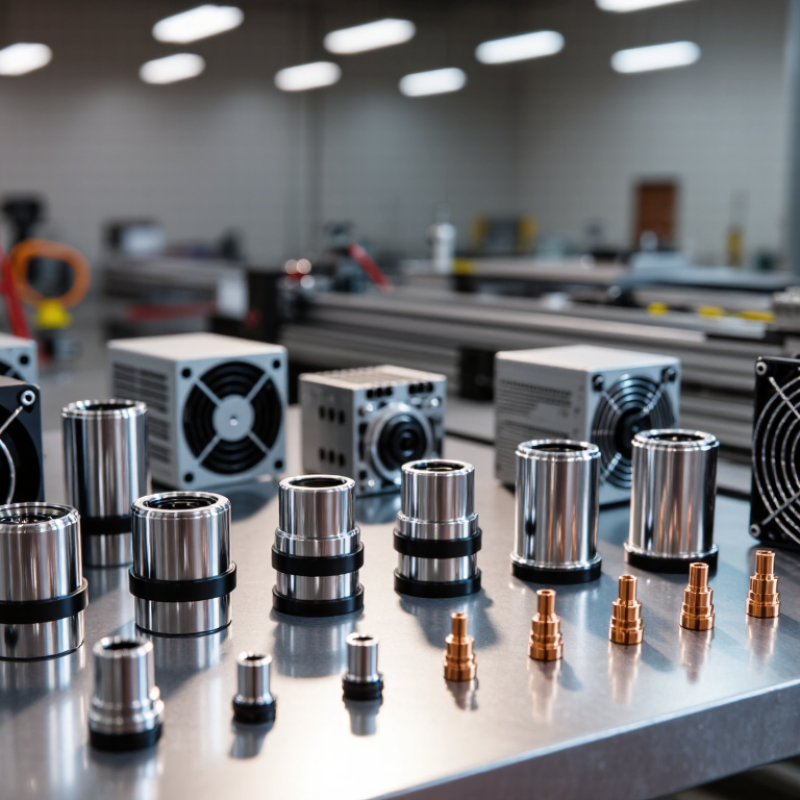
China’s laser spare-parts supply covers optical components, cutting-head accessories, motion-system parts, and cooling or electrical items. Common replacements include protective windows, focusing lenses, nozzles, ceramic rings, sensors, and cables. Some are routine consumables; others require careful diagnosis before replacement. Small parts matter.
For 1,064 nm fiber systems, optical compatibility deserves close attention. A lens must suit the system’s wavelength, coating, focal length, and operating conditions. Protective windows should be checked for contamination, scratches, and heat marks. Even a small change in beam delivery can affect cut quality. A clean-looking component is not always undamaged.
Nozzle dimensions and centering influence gas flow around the cut. Ceramic rings help maintain electrical sensing in compatible cutting heads, while sensors and cables support reliable machine operation. Cooling filters and seals can also matter, though they are easy to overlook. Match parts by machine configuration and technical specifications, not appearance alone. There is no universal spare kit. Keeping replacement records helps identify recurring failures, but records may not reveal the full cause; installation, alignment, and operating conditions still need review.
Key Components: Laser Sources, Optics, Galvo Scanners, and Cutting Nozzles
China’s laser spare-parts sector covers four components that strongly influence daily production: laser sources, optics, galvo scanners, and cutting nozzles. When comparing manufacturers, ask how each part is tested and whether its specifications match your machine’s power, wavelength, and operating conditions. A laser source may offer stable output, yet poor cooling or an unsuitable control interface can complicate installation. Ask for measurable details, not only performance claims.
Optics need consistent coatings, accurate dimensions, and protective packaging. Even a small surface mark can affect beam quality, so inspect lenses and mirrors under suitable lighting before fitting them.
Galvo scanners should be assessed for marking speed, positioning accuracy, and heat behavior during sustained use. Fast is not always precise.
For cutting nozzles, check the bore, material, and fit against the cutting head; a slightly mismatched nozzle can disturb gas flow and leave rough edges.
Keep samples from different suppliers and compare them on the same material and settings. That test is useful, but not perfect: machine alignment and operator adjustments can skew the result. Ask suppliers about replacement availability, inspection records, and technical support, then verify compatibility before ordering.
Technical Benchmarks: 1,064 nm Fiber and 10.6 µm CO₂ Compatibility
China Top 10 Laser Spare Parts Manufacturers
Technical Benchmarks: 1,064 nm Fiber and 10.6 µm CO₂ Compatibility
For buyers comparing laser spare parts manufacturers in China, wavelength compatibility is a practical starting point. A 1,064 nm fiber laser and a 10.6 µm CO₂ laser do not use interchangeable optics. Their lenses, protective windows, and coatings must transmit the intended wavelength and suit the machine’s operating conditions. Check the part specification, not just its shape.
Details matter. At 1,064 nm, inspect the stated coating range, substrate, surface quality, and damage-threshold data for each optical component. CO₂ systems need materials and coatings designed for 10.6 µm; visible inspection alone cannot confirm suitability. Ask suppliers for drawings, test records, and clear identification of compatible laser types. A precise fit helps, but it is not enough.
There is no universal spare-part checklist. Nozzle dimensions, cooling arrangements, mounting tolerances, and process conditions vary between systems. Confirm these against the machine documentation before ordering, and clarify how the supplier handles measurement or fit questions. A catalog can look convincing, yet leave out useful test details. That deserves a second look. Keep records of part numbers and installation results; small differences can explain unexpected beam quality or service life.
China Top 10 Laser Spare Parts Manufacturers — Technical Benchmarks
Nominal operating wavelengths for two common industrial laser types
Typical fiber laser systems operate near 1.064 µm (1,064 nm), while many CO₂ laser systems operate near 10.6 µm (10,600 nm). Optical components and other wavelength-sensitive spare parts must be selected for the laser type; these wavelengths are not interchangeable.
How to Assess Chinese Suppliers: ISO 9001, Tolerances, and Service Life
Choosing a Chinese laser spare-parts supplier takes more than checking a certificate. ISO 9001 indicates a documented quality-management system, but it does not prove that every nozzle, lens holder, or ceramic ring suits your process. Check the certificate’s scope and validity, and confirm that it covers the production site you will use. Small detail. Ask how incoming materials, machining, and final inspections are recorded.
For tolerances, request drawings that specify dimensions, measurement points, and permitted variation. A claim such as ±0.02 mm means little without knowing which feature was measured and how. Ask for inspection reports from recent production batches, not only a carefully selected sample. If fit is critical, compare measurements against your own parts using suitable calibrated tools. A mismatch can cause leaks, vibration, or uneven wear.
Service life depends on operating conditions, including duty cycle, cooling, contamination, and maintenance. Request test conditions and replacement records from comparable applications; a lifespan figure without context is hard to assess. I would not rely on one sample. That is an easy mistake to make. Trial a small batch under normal production conditions, record operating hours, and agree on how failures will be reviewed. A tidy certificate folder helps, but consistent measurements and honest follow-up matter more.
China’s Top 10 Laser Spare Parts Manufacturers: Products and Capabilities
China’s leading laser spare parts manufacturers serve cutting, welding, marking, and engraving equipment with components designed for different power levels and working conditions. Common products include focusing lenses, protective windows, mirrors, cutting nozzles, ceramic rings, and laser-source accessories. Product fit matters: a window that looks identical may differ in coating, thickness, or transmission range.
Capabilities vary across manufacturers. Some produce optical parts in-house, while others focus on metal machining, ceramic components, coatings, or assembly. Look for clear material specifications, dimensional tolerances, coating details, and inspection records. Ask how parts are checked for surface defects and consistency between batches. Small details count. A scratched protective window can disrupt a production run.
Customization may cover dimensions, interfaces, packaging, and compatibility with particular equipment configurations. Before ordering, share drawings or sample measurements and confirm expected service conditions, such as heat, dust, and operating hours. A polished catalogue is useful, but it cannot replace traceable test data. Lead times and quality can also vary; even careful suppliers may need clearer feedback when a part performs differently on the shop floor.
