
Why Choose Aluminium Sheet for Your Project?
Choosing a sheet metal is not just a question of price. It affects weight, fabrication, corrosion resistance, and service life. An aluminium sheet can suit a lightweight equipment enclosure, a vehicle panel, or a clean-lined architectural feature. Its value depends on the alloy, temper, thickness, finish, and working environment. The wrong specification can still disappoint.
Industry data gives useful context. The International Aluminium Institute reported global primary aluminium production of about 70.6 million tonnes in 2023, reflecting the material’s broad industrial role. The U.S. Department of Energy estimates that recycling aluminium uses about 95% less energy than producing it from raw materials. That figure describes recycling, not the full footprint of every sheet product. Source conditions matter.
For project teams, these numbers support careful selection, not automatic approval. Aluminium is light, workable, and recyclable, but it may need coatings or design changes in demanding environments. As a practical expert perspective, International Aluminium Institute Secretary-General Miles Prosser has emphasized aluminium’s importance to the energy transition; the industry’s next challenge is reducing production emissions. That context matters. A useful choice starts with the actual load, exposure, forming method, and maintenance plan. A sample cut can reveal handling issues before a full order. It is a small step, but an easy one to overlook. Compare supplier specifications, request traceable material data, and confirm that the selected grade matches the project’s needs.
What Aluminium Sheet Is and How It Is Produced
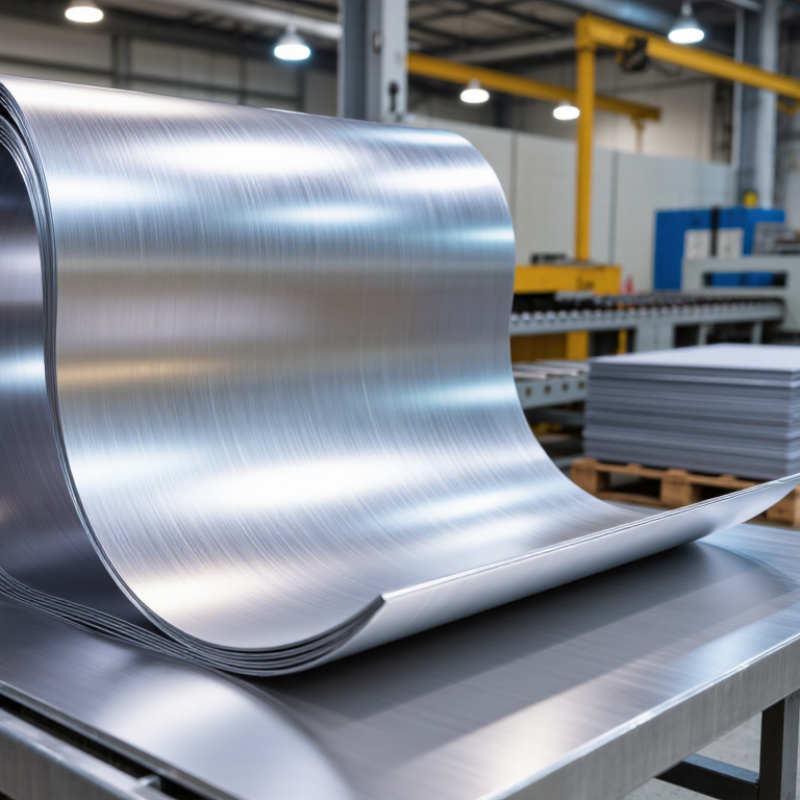
Aluminium sheet is a flat, rolled product made from aluminium or an alloy. Its thickness range depends on the standard being used, so “sheet” does not mean one universal gauge. Production starts with bauxite, refined into alumina through the Bayer process. The alumina is then reduced to molten aluminium by electrolytic smelting. That distinction matters. The International Aluminium Institute reported 70.6 million tonnes of primary aluminium production worldwide in 2023; this figure covers all primary aluminium, not sheet alone.
For sheet, molten metal is cast into a large slab, then hot-rolled and often cold-rolled to reach the required thickness and surface finish. Heat treatment, or annealing, can adjust formability and strength. The alloy and temper matter as much as the final gauge: a panel intended for bending may need different properties from one designed for stiffness. A bright surface can hide differences in grain structure. In practice, processing records and material certificates help verify what a sheet can do; appearance alone cannot. Rolling also does not make every sheet perfectly uniform, so tolerances and intended forming conditions should be checked before specifying material.
Why Choose Aluminium Sheet for Your Project? - What Aluminium Sheet Is and How It Is Produced
| Dimension | Fact or production detail | Why it matters for a project |
|---|---|---|
| What aluminium sheet is | A flat-rolled aluminium product supplied in sheets or coils. Sheet and plate thickness classifications can vary by standard; a commonly used boundary is around 6 mm. | Confirm the applicable product standard and specified thickness when comparing quotations or designing parts. |
| Primary production | Aluminium is produced from alumina, which is commonly extracted from bauxite. Primary aluminium is made by electrolytic reduction of alumina dissolved in a molten bath. | The production route and recycled content can affect a material’s environmental footprint. |
| Casting and rolling | Molten aluminium alloy is cast into a slab or ingot, then rolled. Hot rolling reduces thickness at elevated temperature; cold rolling further reduces thickness at or near room temperature. | Rolling helps achieve the required thickness, surface finish, and dimensional consistency. |
| Heat treatment and finishing | Depending on alloy and temper, the sheet may be annealed or heat-treated, then slit, levelled, or surface-finished. Not every product receives every treatment. | Alloy and temper influence formability, strength, and suitability for fabrication. |
| Density | Aluminium has a density of approximately 2.70 g/cm³; the precise value varies slightly with alloy. | Its relatively low density can help reduce component weight compared with many common structural metals. |
| Melting point | Pure aluminium melts at about 660.3°C. Aluminium alloys generally melt over a temperature range that depends on their composition. | Consider service temperature and joining requirements; alloy properties should be checked for the intended application. |
| Corrosion behaviour | Aluminium naturally forms a thin oxide film on its surface. Corrosion performance depends on alloy, environment, surface condition, and contact with other materials. | Assess exposure to moisture, salts, chemicals, and dissimilar metals; protective finishes may be appropriate. |
| Formability and fabrication | Many aluminium sheets can be cut, bent, punched, or formed, but achievable bend radii and forming limits depend on alloy, temper, thickness, and process. | Specify the alloy and temper alongside dimensions, and validate forming details for the chosen process. |
| Recycling | Aluminium can be recycled. Recycling aluminium typically requires substantially less energy than producing primary aluminium; the exact savings depend on material and process assumptions. | Recycled content and end-of-life recovery can be considered when evaluating material sustainability. |
| Selection checklist | Define alloy, temper, thickness, tolerances, surface finish, mechanical requirements, operating environment, and applicable standard. | A complete specification helps ensure the selected sheet meets fabrication and service requirements. |
Note: Material properties and product classifications vary by alloy, temper, thickness, and standard. Verify the relevant technical data for the specific product and application.
Related Posts
-

How to Choose the Best Aluminum Sheet Metal Supplier
-
Top CNC Machine Types for International Buyers to Consider?
-
How to Choose a CNC Laser Cutter for Your Business?
-
2025 Top 5 CNC Turning Trends and Technologies Revolutionizing Manufacturing
-
Top CNC Manufacturing Companies in China for Global Buyers?
-

What Is a Laser Machine and How Does It Work?