
2026 Best CNC Machine Types for Global Buyers?
Choosing a cnc machine in 2026 requires more than comparing spindle speed and purchase price. Global buyers must match machine design with materials, tolerances, production volume, and available operator skills. A compact three-axis mill may suit a small workshop, while a five-axis machining center can reduce setups for complex aerospace components. Turning centers, routers, Swiss-type lathes, and hybrid machines each solve different production problems.
This guide examines the best cnc machine types for international buyers through practical selection criteria. It considers work envelope, axis movement, control systems, automation, energy use, tooling, and maintenance access. It also discusses supplier training, spare-part availability, remote support, and documentation quality. These details matter when a machine is installed thousands of miles from its manufacturer. A low quote can become expensive if one failed servo motor stops production for weeks.
Real purchasing experience shows that no universal winner exists. A machine that performs well in a German factory may struggle in a humid coastal workshop without proper protection. Buyers should verify certifications, electrical compatibility, warranty terms, installation support, and local service arrangements. Requirements vary by country and industry. Professional advice remains essential.
Some comparisons are imperfect. Product specifications may use different testing conditions, and advertised accuracy may not reflect daily shop-floor results. A neat table cannot reveal every limitation. For that reason, this overview balances manufacturer data with practical questions buyers should ask before ordering. The best choice is not always the most advanced model. It is the machine that delivers reliable parts, manageable costs, and measurable value over time.
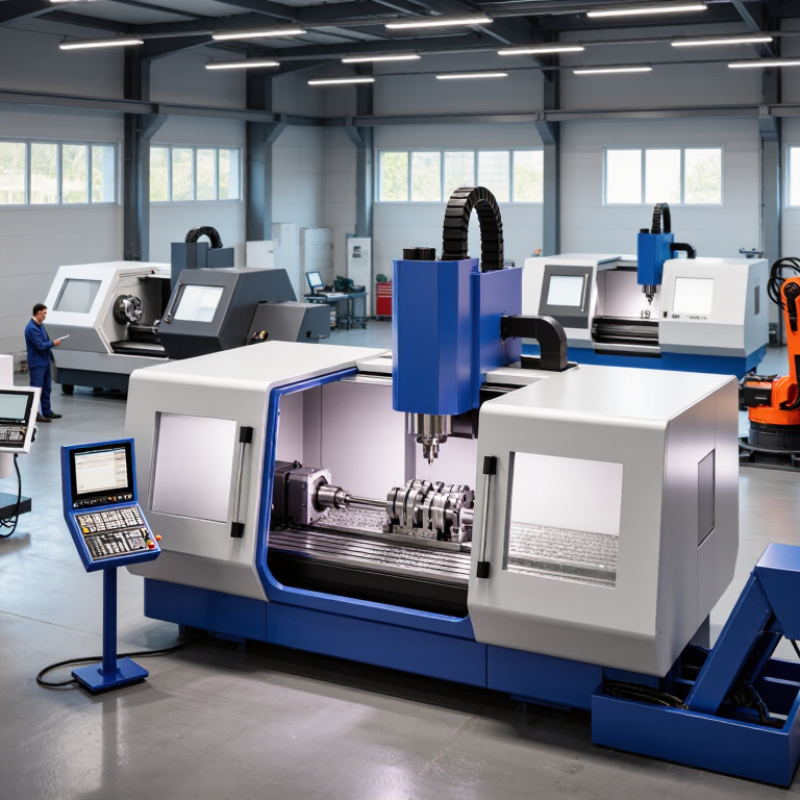
How CNC Machines Are Classified in 2026
In 2026, CNC machines are classified less by appearance and more by motion, process, and control. This matters. A machine may look like a traditional mill, yet perform turning, drilling, and live-tool operations. The clearest classification begins with axes. Three-axis machining moves along X, Y, and Z. Four-axis equipment adds rotary positioning. Five-axis systems tilt and rotate the workpiece or cutting tool, reducing setups for complex aerospace, medical, and energy components. More axes do not automatically mean better results. They usually demand stronger programming skills, accurate calibration, and disciplined fixturing.
Process classification is equally important. Vertical and horizontal machining centers suit prismatic parts, while CNC lathes shape rotational components. Mill-turn machines combine both functions and can reduce transfer errors. Routers often handle sheets, panels, plastics, and softer metals. Wire and sinker electrical-discharge machines remove conductive material through controlled electrical sparks. Cutting method changes tooling, coolant, surface finish, and maintenance.
Buyers should also classify machines by control capability. Basic systems support manual data input; advanced platforms add probing, tool monitoring, collision checking, robotic loading, and production data tracking. In factory evaluations, I would verify repeatability with a documented test piece, not rely on brochure accuracy. Check spindle speed, working envelope, axis travel, power supply, language support, training, and local service response. A machine can be technically impressive but poorly matched to daily production. This classification method is useful, but it is not flawless. Job materials, tolerances, operator experience, and floor space can change the decision. Sometimes a simpler machine produces more dependable parts.
2026 Best CNC Machine Types for Global Buyers? - How CNC Machines Are Classified in 2026
A practical classification guide based on machine structure, cutting process, axis configuration, workpiece type, and common industrial applications.
| CNC Machine Type | Primary Classification | Typical Axis Configuration | Main Operations | Common Materials | Typical Workpiece Size | Typical Positioning Accuracy* | Best Use for Global Buyers |
|---|---|---|---|---|---|---|---|
| CNC Milling Machine | Subtractive machining; rotating cutting tool with a stationary or moving workpiece | 3-axis 4-axis 5-axis | Face milling, slotting, drilling, pocketing, contouring, and 3D surface machining | Aluminum, steel, stainless steel, brass, plastics, titanium, and composites | Small to large prismatic components, depending on table size and machine travel | Approximately ±0.005–0.025 mm for many production machines | General-purpose parts, dies, molds, fixtures, aerospace components, and precision prototypes |
| CNC Machining Center | Enclosed automated milling platform with tool-changing and multi-operation capability | 3-axis 4-axis 5-axis | Milling, drilling, tapping, boring, reaming, and automated multi-face machining | Steel, cast iron, aluminum, copper alloys, engineering plastics, and titanium | Small to medium components, with horizontal designs often suited to heavier production work | Approximately ±0.005–0.020 mm under suitable conditions | High-repeatability batch production and complex parts requiring several operations |
| CNC Lathe and Turning Center | Subtractive machining; workpiece rotates while cutting tools move along controlled axes | 2-axis Y-axis Live tooling | Turning, facing, boring, threading, grooving, drilling, and parting | Steel, stainless steel, aluminum, brass, copper alloys, plastics, and titanium | Round, tubular, or rotational parts ranging from small shafts to large components | Approximately ±0.005–0.020 mm for many precision turning applications | Shafts, bushings, flanges, threaded parts, hydraulic components, and fittings |
| CNC Swiss-Type Lathe | Precision turning with sliding-headstock support and guide-bushing workholding | Multi-axis Live tooling Sub-spindle | High-speed turning, milling, drilling, threading, and simultaneous front-and-back machining | Stainless steel, titanium, nickel alloys, brass, aluminum, and medical-grade polymers | Small-diameter, long, and intricate components | Approximately ±0.002–0.010 mm for suitable small precision parts | High-volume miniature components for medical, electronics, instrumentation, and precision engineering |
| CNC Router | High-speed material removal using a rotating spindle, generally with a gantry structure | 3-axis 4-axis | Profiling, engraving, nesting, drilling, pocketing, and panel cutting | Wood, MDF, plywood, plastics, acrylic, aluminum sheet, and composite panels | Large sheet and panel formats with relatively low cutting forces | Approximately ±0.05–0. twintig mm, depending on structure and application | Furniture, signage, architectural panels, packaging prototypes, and non-ferrous sheet materials |
| CNC Laser Cutting Machine | Thermal cutting using a focused laser beam and assist gas | 2D X-Y 3D options | Cutting, piercing, marking, and fine contouring of sheet or tube | Carbon steel, stainless steel, aluminum, brass, copper, and selected non-metal sheets | Flat sheets, tubes, and profiles; thickness depends on laser power and material | Approximately ±0.03–0. दस mm for many industrial sheet-cutting systems | Fast sheet-metal production, intricate profiles, low-tooling fabrication, and nesting work |
| CNC Plasma Cutting Machine | Thermal cutting using an electrically conductive plasma arc | 2D X-Y Bevel cutting | Plate cutting, profiling, hole cutting, and bevel preparation | Mild steel, stainless steel, and aluminum | Medium to very thick metal plate, depending on plasma power | Approximately ±0.10–0.50 mm, depending on plate thickness and process settings | Structural steel, heavy fabrication, machinery frames, agricultural equipment, and repair work |
| CNC Waterjet Cutter | Cold abrasive or pure-water cutting using a high-pressure water stream | 2D X-Y 3D cutting head | Profile cutting, bevel cutting, hole making, and multi-layer material cutting | Steel, aluminum, stone, glass, ceramics, rubber, composites, and heat-sensitive materials | Large plates and thick or laminated materials | Approximately ±0.05–0.20 mm, depending on machine class and cutting speed | Heat-sensitive materials, thick plate, architectural stone, aerospace composites, and mixed-material fabrication |
| CNC EDM Machine | Non-contact electrical-discharge machining for electrically conductive materials | Sinker EDM Wire EDM Hole drilling | Die sinking, wire contouring, micro-hole drilling, sharp internal corners, and hardened-part machining | Tool steel, hardened steel, carbide, nickel alloys, and other electrically conductive materials | Small to medium precision components, dies, molds, and intricate profiles | Approximately ±0.002–0.015 mm for precision applications | Complex tooling, hardened materials, narrow slots, fine details, and difficult internal geometries |
| CNC Gear-Hobbing and Gear-Shaping Machine | Dedicated gear manufacturing using synchronized cutting motions | Multi-axis Synchronized rotation | External gear cutting, spline production, helical gear machining, and gear shaping | Alloy steel, carbon steel, cast iron, brass, bronze, and engineering plastics | Small to medium gears, shafts, splines, and transmission components | Typically controlled by gear accuracy grade; final results depend on tooling and inspection | Automotive, industrial transmission, robotics, power equipment, and motion-control components |
*Accuracy figures are indicative industry ranges rather than guaranteed specifications. Actual performance depends on machine design, thermal stability, calibration, tooling, workholding, material, cutting conditions, and measurement method.
Related Posts
-
China Top 10 CNC Milling Machine Manufacturers
-
2026 How to Choose a CNC Milling Machine?
-

Top 10 Benefits of Using a CNC Mill in Your Projects?
-
2026 Best CNC Mill Options for Precision Machining and Efficiency?
-
Top 10 CNC Mills for Global Buyers in 2026?
-
Why Choose a CNC Mill for Global Manufacturing?