2026 Top CNC Milling Machine Types for Global Buyers

Choosing a cnc milling machine starts with the parts you need to make, not the machine’s headline specifications. A compact vertical model may suit a job shop producing brackets, plates, and short production runs. Horizontal machines can handle heavier cuts and multiple-sided work with suitable fixtures. Five-axis systems reach complex surfaces, but they also demand skilled programming and careful setup. Bed and gantry mills provide room for large components, though their footprint and installation needs can be substantial. Types overlap. Fit matters.

This guide compares common machine designs through practical buying criteria: work envelope, spindle speed and torque, tool capacity, accuracy, control system, and expected workload. A shop cutting aluminum housings has different needs from one machining steel molds. Consider the actual part dimensions, material, tolerances, and production volume before comparing price or speed. For international purchasing, check electrical requirements, control-language options, shipping arrangements, commissioning, spare-parts access, and local service coverage. These details can affect startup time as much as the machine itself. Ask suppliers for specifications, sample-part results, and references relevant to your application. A polished brochure is not a machining test. Some details still get missed. No general ranking can replace a review of your parts and shop conditions. The following overview gives global buyers a clearer basis for comparing machine types and deciding which questions to ask before requesting a quotation.
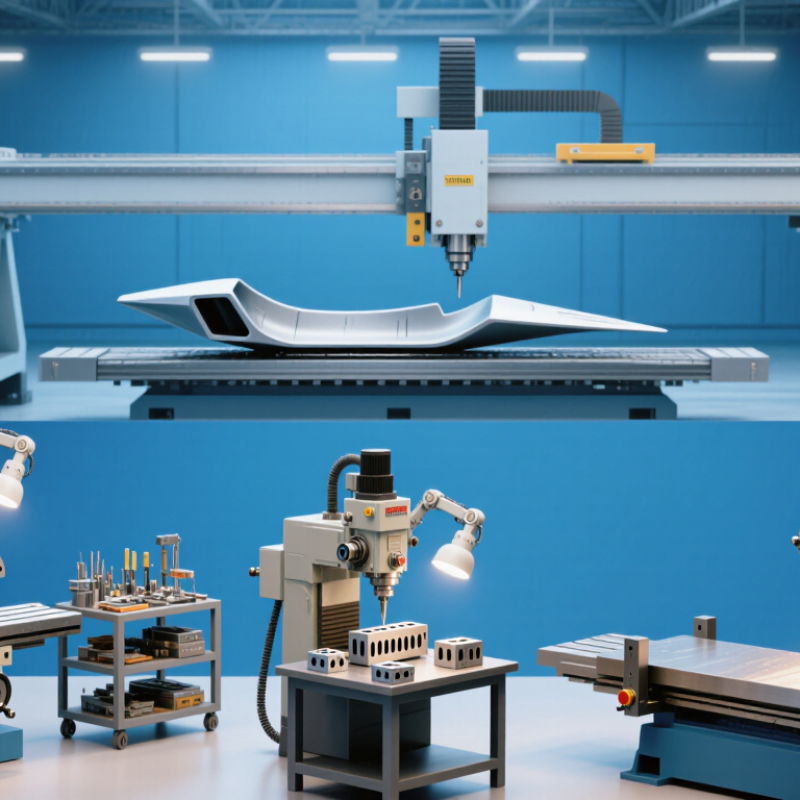
2026 Top CNC Milling Machine Types for Global Buyers

How CNC Milling Machines Work and How Their Types Are Classified

A CNC milling machine removes material with a rotating cutter while the workpiece is held on a table. The controller follows programmed coordinates, adjusting tool movement, spindle speed, and feed rate. A machinist may hear the spindle change pitch as the cutter enters steel. That sound can signal load, but it cannot replace measurement. Setup still matters.

Types are classified in several ways. Axis count describes movement: three-axis machines handle many flat and contoured parts, while four- and five-axis models reach more faces with fewer repositioning steps. Machine layout also matters. Vertical mills suit accessible setups; horizontal designs can support chip evacuation and larger production runs. Tool capacity, travel, rigidity, and control features further separate models. A neat category can still mislead.

Grand View Research estimated the global CNC machine market at USD 101.22 billion in 2023, with projected growth through 2030. This is market-wide data, not a milling-machine sales count, so buyers should treat it as context. For practical comparison, check repeatability, work envelope, spindle power, and service access against the actual part. Tiny parts need different priorities. A machine’s axis count alone does not guarantee accuracy; workholding, cutting tools, and operator setup all affect the finished surface.

3-Axis CNC Milling Machines for Standard Machining Tasks

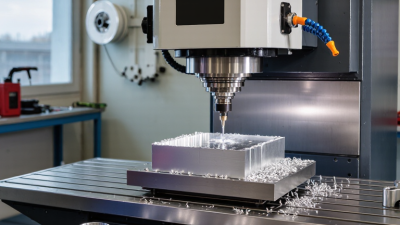
A 3-axis CNC milling machine moves the cutting tool along the X, Y, and Z axes. This straightforward arrangement suits many standard jobs, including facing, slotting, drilling, and producing flat or stepped parts. A machinist can load a metal block, secure it in a vise, and cut a pocket with predictable tool paths. Setup still matters. Poor clamping can let a workpiece shift, leaving chatter marks or inaccurate edges.

These machines are often practical for brackets, plates, housings, and other parts with features accessible from one direction. They can also reduce programming complexity compared with machines that add rotary axes. Yet “standard” does not mean effortless. Tool wear, material hardness, spindle condition, and temperature all affect the finished result. A useful inspection routine checks critical dimensions with calibrated measuring tools, rather than trusting the program alone.

A common planning mistake is assuming every feature can be reached in one setup. Deep side holes or angled surfaces may require repositioning, extra fixtures, or another machine configuration. That adds time and can introduce alignment error. It is easy to overstate how universal a 3-axis machine is. For many everyday parts, though, its simpler workflow is a real advantage.

4-Axis and 5-Axis CNC Milling Machines for Complex Parts

For complex parts in 2026, the choice between four and five axes depends on geometry, batch size, and setup strategy. A four-axis mill adds rotary motion, often allowing several faces to be machined without manually repositioning the part. A five-axis machine also tilts the tool or workpiece, helping it reach curved surfaces and angled features. Fewer setups can reduce handling and alignment errors. Setup time matters. But extra axes do not guarantee faster production; programming, calibration, and operator experience still matter.

Investment reflects a broad shift toward advanced machining. Gardner Intelligence’s 2023 World Machine Tool Survey estimated global machine-tool consumption at about US$98.8 billion in 2022. The International Federation of Robotics reported 4.28 million industrial robots operating worldwide in 2023, a sign of expanding automation around production equipment. These figures are not specific to multi-axis mills, so buyers should assess their own part mix. For a deep cavity, a five-axis machine may improve tool access; for a part with repeated side features, four-axis indexing may be sufficient. A useful test is to compare actual cycle time, fixture cost, and scrap risk on representative parts. The five-axis option can look compelling on paper. Its learning curve is real, too.

2026 Top CNC Milling Machine Types for Global Buyers - 4-Axis and 5-Axis CNC Milling Machines for Complex Parts

Machine Type Axis Configuration Typical Workpiece Access Suitable Applications Key Advantages Buyer Considerations
3-Axis Vertical Milling Machine Three linear axes: X, Y, and Z. Tool approaches the workpiece from one primary direction; additional faces may require repositioning. Prismatic parts, plates, pockets, slots, and general-purpose machining. Widely used configuration; straightforward programming and suitable for many routine milling operations. Consider whether the part needs machining on multiple sides, and compare work envelope, spindle, tool capacity, and workholding options.
4-Axis CNC Milling Machine Three linear axes plus one rotary axis, commonly an A-axis around X or a C-axis around Z; configurations vary. Rotary motion can index or rotate the workpiece to expose additional sides. Some systems support rotary motion during cutting. Shafts, cylindrical components, parts with features around a central axis, and multi-sided components. Can machine features on multiple faces with fewer manual re-clamping steps than a basic 3-axis setup. Check rotary-axis orientation, workpiece clearance, rotary table capacity, tailstock or support options, and whether the control supports the required indexing or continuous motion.
3+2-Axis (Indexed 5-Axis) Milling Machine Three linear axes and two rotary axes; the rotary axes position the part or tool, then are typically held while the three linear axes cut. Angled tool or workpiece positions allow access to multiple faces without changing the setup for each face. Complex housings, angled holes, impellers, molds, and parts with features on several sides. Can reduce setups and improve access to angled features while using familiar 3-axis cutting motion for many operations. Confirm the machine’s rotary travel, pivot or center-of-rotation data, collision-clearance needs, and CAM post-processor support.
Simultaneous 5-Axis Milling Machine Three linear axes plus two rotary axes that can move in coordination with the linear axes during cutting. The tool or workpiece can change orientation continuously, subject to the machine’s kinematics and travel limits. Turbine blades, blisks, aerospace structures, sculpted surfaces, and other parts with continuously changing contours. Enables complex toolpaths and can reduce setups; suitable tool orientation may also help maintain cutting conditions on shaped surfaces. Evaluate control capability, machine kinematics, CAM simulation, post-processor validation, operator training, and collision management.
4-Axis Horizontal Milling Machine Three linear axes plus a rotary table or pallet-based rotary axis; exact layouts differ by machine. Horizontal spindle orientation and rotary workholding can provide access to multiple sides of a component. Production machining of prismatic components, including parts with side features and repeatable multi-face operations. Can support efficient multi-face machining; pallet or tombstone workholding may allow several parts to be set up together. Check pallet dimensions, workpiece envelope, fixture access, chip evacuation, and whether the rotary axis is intended for indexing or continuous cutting.
5-Axis Vertical Milling Machine Three linear axes plus two rotary axes, often integrated into a tilting table, swivel head, or combined arrangement. Provides access to multiple faces and angled surfaces; usable access depends on the machine’s rotary arrangement and part size. Complex components, precision molds, medical parts, aerospace parts, and contoured surfaces. Combines multi-directional access with a vertical machining layout; can be configured for indexed or simultaneous 5-axis work. Compare table or head configuration, rotary-axis range, center-of-rotation accuracy, workpiece loading, and service requirements.

Selection note: Actual capabilities depend on machine configuration, workholding, tooling, control, CAM software, and material. Axis count alone does not determine accuracy, productivity, or part suitability; verify specifications against the intended part and process.

Vertical, Horizontal, and Gantry Mills by Machine Configuration

Vertical CNC mills suit many general-purpose jobs because the spindle points downward and the workpiece sits on a table. This layout makes setup and inspection fairly direct. A machinist can watch a pocket take shape, check a bore, then adjust the tool path. It works well for dies, plates, and smaller components. But table size can become a hard limit. A large part may fit on paper and still be awkward to clamp.

Horizontal mills place the spindle parallel to the floor. Their rotary table can present several sides of a part without repeated manual repositioning. That matters for housings with features on multiple faces. Chips also tend to fall away from the cutting area, though coolant flow and enclosure design still matter. Don’t assume the horizontal layout automatically improves output. Fixture design and tool access can make or break the cycle.

Gantry mills span large workpieces with a bridge-like structure, making them useful for long panels, molds, and heavy components. The machine’s footprint is substantial. So is the planning required. Buyers should compare travel, table load, spindle reach, and the space needed for maintenance—not just advertised cutting dimensions. A detail often missed: the largest machine is not always the most capable choice. A part near the edge of the working envelope may be harder to machine accurately, and that deserves a closer look.

2026 Top CNC Milling Machine Types for Global Buyers

Representative vertical, horizontal, and gantry mill configurations by axis count

These bars show common example configurations, not fixed limits: a 3-axis mill uses three linear axes, while a 4-axis setup adds a rotary axis. Vertical, horizontal, and gantry machines are also available in other axis configurations, including 5-axis models.

How Global Buyers Choose CNC Milling Machines for Their Needs

Choosing a CNC milling machine begins with the part, not the machine’s headline specifications. A vertical mill suits many prismatic parts and shops with limited floor space. Horizontal machines can help when parts need machining on several sides, while five-axis models handle complex angles with fewer setups. Larger gantry mills are built for oversized workpieces. Fit matters.

List the materials, largest part dimensions, tightest tolerances, and expected monthly volume. Then compare the working envelope, spindle torque, tool capacity, and chip removal. Aluminum parts may favor higher spindle speeds; steel cutting often calls for more torque and stable workholding. A machine that looks fast on paper may struggle with your actual cutter, fixture, or cycle time. Test a representative part if possible, and record the result.

Global buyers should also check site power, floor loading, installation requirements, operator training, and access to replacement parts. Ask what routine maintenance involves and how service requests are handled across time zones. Manuals and control interfaces matter when operators have different experience levels. A small gap in training can cause avoidable setup errors. I would not choose solely by purchase price; downtime, tooling, and shipping can change the real cost. One detail is easy to miss: confirm that your preferred fixtures and measuring tools fit the machine’s table and control workflow.