Choosing the right CNC manufacturing partner can shape a product’s cost, quality, and launch schedule. For global buyers, the decision involves more than comparing hourly rates or attractive website photos. It requires evidence of engineering capability, production consistency, and reliable international communication.
This guide examines ten CNC manufacturing companies serving international customers. Each company is considered through practical criteria, including machine capacity, material expertise, dimensional tolerances, quality-control systems, and typical project support. Details such as inspection reports, sample parts, surface finishes, packaging methods, and response times can reveal more than broad marketing claims. Certifications may strengthen confidence, but they should never replace direct verification.
Real projects rarely follow a perfect plan. A supplier may offer excellent milling quality but struggle with urgent orders. Another may provide fast quotations yet communicate poorly during design changes. That difference matters. For this reason, the review considers both measurable strengths and possible limitations. It also reflects the experience of buyers who must manage drawings, prototypes, production batches, and cross-border delivery.
The companies featured here represent different approaches to cnc manufacturing, from prototype-focused workshops to larger production facilities. Their suitability depends on your materials, tolerances, order volume, budget, and target market. A capable supplier is not automatically the best supplier for every project.
Look beyond the brochure. Ask precise questions. Confirm the details. Reliable decisions come from comparing documented capabilities with your actual manufacturing requirements, not from rankings alone.
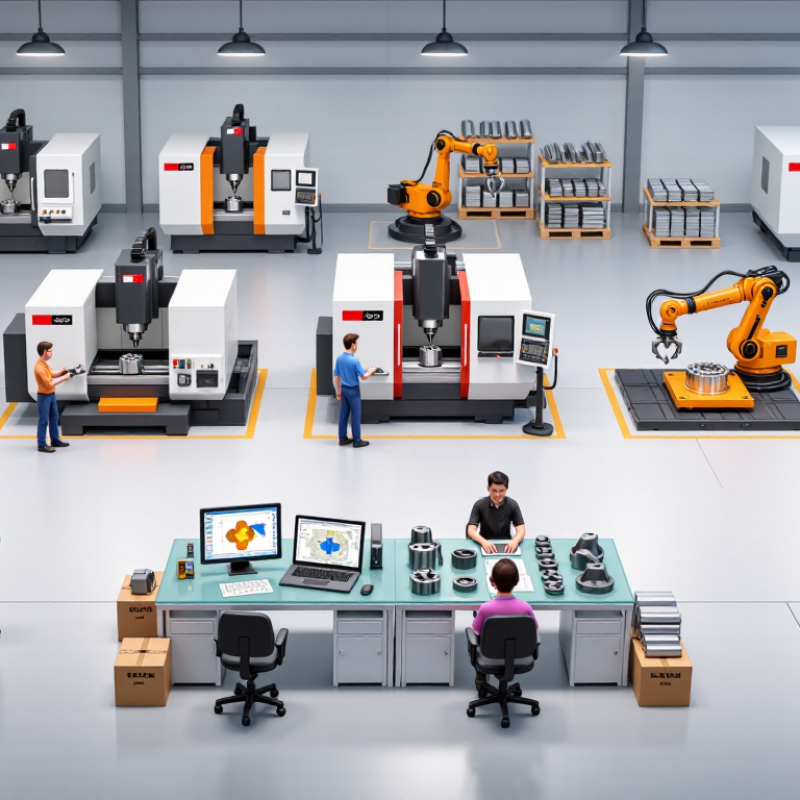
CNC manufacturing companies produce precise parts by removing material from metal, plastic, and other engineered materials. Their machines follow digital designs to mill, turn, drill, or cut components. In global supply chains, these companies connect product designers with dependable physical production. They may support prototype work, small batches, and long-term manufacturing programs.
Their role extends beyond machine operation. A capable supplier reviews drawings, checks material specifications, and identifies risks before cutting begins. It may also manage tooling, surface treatment, dimensional inspection, packaging, and export documentation. For example, an engineer might verify a 0.02 millimeter tolerance using calibrated measuring equipment. That report helps a buyer compare parts across different production runs.
Reliable CNC partners communicate clearly when a design is difficult or unrealistic. They explain how tool access, wall thickness, heat treatment, or production volume affects cost and quality. Experience matters here. A technically impressive website proves little by itself. Factory records, inspection methods, sample approval, and traceable communication offer stronger evidence. Still, no supplier is perfect. A delayed material certificate or unclear revision can disrupt an entire assembly line. Buyers should question assumptions, confirm specifications in writing, and review early samples carefully. The best CNC manufacturing companies do not merely fill orders; they reduce uncertainty between global teams, machines, and final products.
When evaluating international CNC manufacturing suppliers, start with process evidence, not polished websites. Ask for machine lists, tolerance records, material certificates, and recent inspection reports. A capable supplier should explain how it controls tool wear, heat distortion, surface finish, and batch variation. ISO’s Survey 2023 recorded 1,265,216 ISO 9001 certificates across 189 countries and economies. Certification helps, but it does not replace technical verification.
Request a sample part or a documented first-article inspection. Check whether the supplier uses calibrated CMM equipment and provides traceable measurement results. Review lead times against actual monthly capacity, not optimistic quotations. The 2024 World Manufacturing Forum report highlights digitalisation, resilience, and workforce capability as major manufacturing priorities. Therefore, evaluate production tracking, backup equipment, engineering response times, and operator training. Small details matter. A delayed material certificate can stop an entire shipment.
International work adds risks that drawings cannot show. Confirm packaging standards, export documentation, incoterms, payment controls, and communication hours. Ask how nonconforming parts are isolated and corrected. One uncomfortable lesson is that low pricing often hides inspection gaps, weak planning, or expensive rework. I would also request references for similar materials, tolerances, and annual volumes. A supplier may pass a sample test yet struggle with repeatability. Leave room for doubt. The strongest evaluation combines factory evidence, independent documents, clear corrective-action records, and a controlled pilot order.
The ten leading CNC manufacturing companies serving global buyers differ in equipment, materials, and production focus. Several operate five-axis machining centers for complex aerospace, medical, and industrial parts. Others specialize in aluminum housings, stainless steel shafts, or short-run prototypes. Their practical value depends on repeatable tolerances, clear communication, and proven inspection systems.
Experienced suppliers usually provide dimensional reports, material certificates, and first-article inspection records. Some use coordinate measuring machines beside the production line. This helps detect small deviations before shipment. Buyers should also review surface finishes, thread standards, heat-treatment control, and packaging methods. A reliable partner explains design-for-manufacturing risks before quoting. That conversation can prevent costly rework.
No supplier is perfect. A fast quotation may hide limited capacity or unclear tolerance assumptions. Delivery promises can also change when raw materials arrive late. I would request sample reports, production photos, and references from similar industries. Ask how engineers handle a drawing revision during production. Ask who pays when a batch fails inspection. Small details matter. Global buyers should compare response quality, not only unit price. Time-zone coverage, export documents, payment terms, and replacement procedures often shape the real cost. A capable CNC company delivers metal parts, but dependable cooperation requires evidence at every stage.
Choosing among the 10 best CNC manufacturing companies requires more than comparing hourly prices. The strongest suppliers offer milling, turning, Swiss machining, five-axis work, surface finishing, and assembly support. They also handle prototypes and repeat production. Some provide design-for-manufacturing reviews, which can prevent thin walls, deep pockets, and costly rework.
Material coverage is equally important. Experienced companies commonly machine aluminum, stainless steel, carbon steel, titanium, brass, copper, engineering plastics, and high-temperature alloys. Buyers should ask for material certificates and lot traceability. A small metal sample can reveal tool marks, burrs, or inconsistent finishing. These details matter in aerospace brackets, medical instruments, automotive housings, robotics, and industrial equipment.
Certifications help measure process discipline. ISO 9001 supports quality management, while AS9100 suits aerospace production. ISO 13485 is relevant to medical devices, and IATF 16949 may support automotive programs. However, a certificate alone proves little about communication or delivery reliability. No ranking is perfect. A supplier with advanced equipment may still struggle with urgent revisions. Buyers should review inspection reports, coordinate tolerances early, and confirm whether finishing is completed in-house or through qualified partners. Clear drawings, realistic quantities, and agreed acceptance standards usually produce better results.
Choosing a CNC manufacturing partner requires more than comparing hourly rates. Global buyers should examine proven experience with similar materials, tolerances, and production volumes. Ask for sample inspection reports, material certificates, and photographs of finished parts. Ask for evidence.
A reliable supplier can explain its complete process clearly. This includes drawing review, tool selection, machining, deburring, inspection, packaging, and shipping. Request details about coordinate measuring equipment and calibration records. A capable quality team should identify risks before production begins, not after defective parts arrive. Confirm how the company protects drawings, tracks revisions, and handles nonconforming products.
Communication deserves close attention. During a trial order, note whether engineers answer technical questions precisely and report delays early. A small pilot batch can reveal surface-finish consistency, dimensional stability, and packaging quality. Measure twice. Do not judge capacity only by a polished factory video; verify available machines, staffing, maintenance routines, and realistic lead times. Capacity claims can change during peak seasons.
Buyers should also review compliance with applicable import, product-safety, labor, and environmental requirements. Written terms should define tolerances, payment stages, ownership of tooling, inspection rights, and remedies for rejected parts. No partner is flawless. A supplier that openly discusses past mistakes and corrective actions may be more dependable than one promising perfection. Personally, I would value documented evidence over confident sales language every time.
Comparative selection table based on practical CNC sourcing criteria, including process capability, material coverage, quality control, export readiness, and suitability for different project stages. Company names and brand identifiers are intentionally omitted.
| Supplier Profile | Best-Fit Buyer Requirement | Core CNC Processes | Typical Materials | Prototype Capability | Production Volume Fit | Typical Dimensional Tolerance | Quality Documentation | International Fulfillment Strength | Selection Score |
|---|---|---|---|---|---|---|---|---|---|
| Supplier Profile 01 | Complex prototypes requiring fast engineering feedback | 3-axis milling 5-axis milling Turning | Aluminum, stainless steel, brass, engineering plastics | Very strong; suitable for one-off and low-volume parts | Prototype to 5,000 parts | Approximately ±0.01 mm on controlled features | Inspection report, material certificate, first-article report available by request | Strong export packaging and documentation support | 9.4 |
| Supplier Profile 02 | Repeat production of tight-tolerance metal components | CNC turning Live tooling Milling | Carbon steel, stainless steel, aluminum, copper alloys | Strong; engineering samples supported | 1,000 to 100,000 parts | Approximately ±0.005 to ±0.02 mm, depending on feature and material | Process inspection records, gauge reports, traceability documentation | Reliable for scheduled international replenishment | 9.2 |
| Supplier Profile 03 | Automotive, industrial, and machinery assemblies | 4-axis milling Turning Drilling | Aluminum, alloy steel, stainless steel, cast materials | Good; design-for-manufacturing review included | 5,000 to 250,000 parts | Approximately ±0.01 to ±0.03 mm | Control plan, inspection reports, process capability data where applicable | Good container and palletized shipment capability | 9.0 |
| Supplier Profile 04 | Plastic housings, covers, brackets, and non-metallic parts | 3-axis milling 3D machining Finishing | ABS, POM, nylon, PC, PEEK, PTFE, acrylic | Excellent for functional prototypes and fit checks | Prototype to 20,000 parts | Approximately ±0.02 to ±0.10 mm, depending on polymer and geometry | Dimensional inspection, material data sheets, visual approval records | Good protection against deformation and surface damage in transit | 8.8 |
| Supplier Profile 05 | Medical, laboratory, and precision-instrument components | 5-axis milling Micro-machining Turning | Titanium, stainless steel, aluminum, PEEK, medical-grade polymers | Strong; supports controlled prototype builds | Prototype to 50,000 parts | Approximately ±0.005 to ±0.02 mm on qualified features | Material traceability, inspection records, nonconformance control, cleanliness documentation | Strong documentation discipline for regulated supply chains | 9.1 |
| Supplier Profile 06 | Large structural parts and equipment frames | Large-format milling Boring Drilling | Aluminum plate, carbon steel, stainless steel, cast iron | Moderate; optimized for production-sized components | 10 to 10,000 parts | Approximately ±0.03 to ±0.10 mm, depending on part size | Dimensional reports, weld or machining records, material certificates | Experienced with oversized crates and project cargo coordination | 8.7 |
| Supplier Profile 07 | High-mix, low-volume industrial replacement parts | CNC milling CNC turning Threading | Steel, aluminum, brass, stainless steel, industrial plastics | Very strong; suitable for small batches | 1 to 10,000 parts | Approximately ±0.02 to ±0.05 mm | Basic inspection report, material verification, packaging checklist | Flexible shipping options for urgent spare-part orders | 8.6 |
| Supplier Profile 08 | Consumer, electronics, and visible enclosures | CNC milling Surface finishing Engraving | Aluminum, zinc alloys, acrylic, ABS, PC, nylon | Excellent for appearance models and pilot runs | Prototype to 50,000 parts | Approximately ±0.02 to ±0.05 mm | Appearance approval sample, dimensional report, finish specification | Strong support for retail-ready packaging and mixed shipments | 8.9 |
| Supplier Profile 09 | Aerospace-style lightweight and high-strength components | 5-axis milling Turning Complex contouring | Aluminum alloys, titanium, stainless steel, nickel alloys | Strong; suitable for engineering validation parts | Prototype to 25,000 parts | Approximately ±0.005 to ±0.02 mm on specified features | Full inspection package, material traceability, revision control, process records | Strong control of export documents and batch traceability | 9.3 |
| Supplier Profile 10 | Cost-sensitive production with integrated finishing | CNC milling Turning Post-processing | Aluminum, mild steel, stainless steel, brass, common plastics | Good; rapid quotation and sample production available | 500 to 100,000 parts | Approximately ±0.02 to ±0.05 mm | Inspection report, coating or anodizing records, packing list | Competitive for consolidated international shipments | 8.5 |
Note: Tolerance values are typical commercial CNC ranges rather than guaranteed specifications. Buyers should confirm the drawing, material grade, surface-finish standard, inspection method, minimum order quantity, lead time, Incoterms, and applicable compliance requirements before placing an order.